Assembly Line Improvement Case Study: Time Reduction Techniques for...
Column
media
column
Assembly Line Improvement Case Study: Time Reduction Techniques for Screw Fastening Processes
Introduction
In Vietnam, a country experiencing rapid economic growth, manufacturing is a key industry contributing approximately 20% to 25% of the nation’s GDP. In recent years, Vietnam’s annual GDP growth rate has consistently been around 6% to 7%, attracting many foreign companies and increasing its importance as a production hub. However, alongside this growth, the manufacturing sector faces new challenges such as an annual labor cost increase of 5% to 10% and rising quality demands from the global market. To address these challenges and maintain/strengthen international competitiveness, improving production efficiency and stabilizing quality are indispensable.
Among manufacturing processes, assembly accounts for 20% to 40% of all manufacturing steps, and the “screw fastening process” in particular constitutes a significant portion, ranging from 30% to 50% of total assembly work. Reducing time in this screw fastening process offers a wide range of benefits, including manufacturing cost reduction, product quality improvement, and shorter lead times. For Vietnamese manufacturing sites, efficiency and quality stabilization are urgent issues, and improving the screw fastening process is key to enhancing competitiveness.
This article delves into the challenges faced by Vietnamese manufacturing in screw fastening processes and provides a detailed explanation of specific techniques to achieve time reduction. We will demonstrate how to improve productivity and stabilize quality through a multi-faceted approach, including automation, optimization of tools and jigs, improvement of work procedures, and data utilization. Ohta Vietnam offers optimal solutions to address these challenges and strongly supports the sustainable growth of Vietnamese manufacturers.
Challenges in Screw Fastening Processes and the Need for Time Reduction
The screw fastening process is extremely critical for determining product quality and reliability, yet many manufacturing sites face various challenges. Manual screw fastening, in particular, leads to numerous problems due to its inefficiency.
Inefficiency and Quality Issues with Manual Screw Fastening
Variability in work time and fatigue: Manual screw fastening is highly dependent on individual worker skill and physical condition, leading to significant variations in fastening time per screw, ranging from a few seconds to tens of seconds. Prolonged repetitive work accumulates fatigue, resulting in decreased productivity.
Quality instability: Manual work is prone to fastening defects such as missed fastenings, overtightening (over-torque), insufficient tightening, and thread damage. The average defect rate for manual fastening is said to reach 0.1% to 1%, and these defects can escalate into serious problems related to product malfunction or safety.
Reliance on skilled workers and human resource development challenges: High-quality screw fastening requires skilled techniques and experience. It is not uncommon for there to be a 20% to 30% difference in work time between skilled and unskilled workers. Sites heavily reliant on skilled workers face difficulties in maintaining a stable production system. Furthermore, training unskilled workers requires time and cost.
Hidden Costs and Challenges Specific to Vietnamese Manufacturing Sites
Costs due to rework and defective products: When fastening defects occur, rework or disposal of defective products becomes necessary, which can lead to a cost increase of 5% to 15% of the manufacturing cost. Improvements are expected to reduce rework time by 20% to 50%.
Responding to high-mix, low-volume production: With diversifying market needs, there is an increasing demand for high-mix, low-volume production. In manual-intensive lines, setup changes during product changeovers take time, significantly reducing production efficiency.
Difficulty in technology transfer: Establishing Japanese-style meticulous quality control and production technology in Vietnamese factories faces various challenges, including cultural and language barriers, and a lack of adequate training systems.
To solve these challenges and achieve sustainable growth, fundamental improvements aimed at reducing time and stabilizing quality in the screw fastening process are essential.
Specific Techniques for Achieving Time Reduction
Time reduction and quality improvement in the screw fastening process are not achieved by a single solution but by combining multiple approaches for maximum effect. Here, we introduce practical improvement methods from various angles.
1. Introduction of Automation and Semi-Automation
To overcome the limitations of manual work, the introduction of automation and semi-automation is the most effective approach.
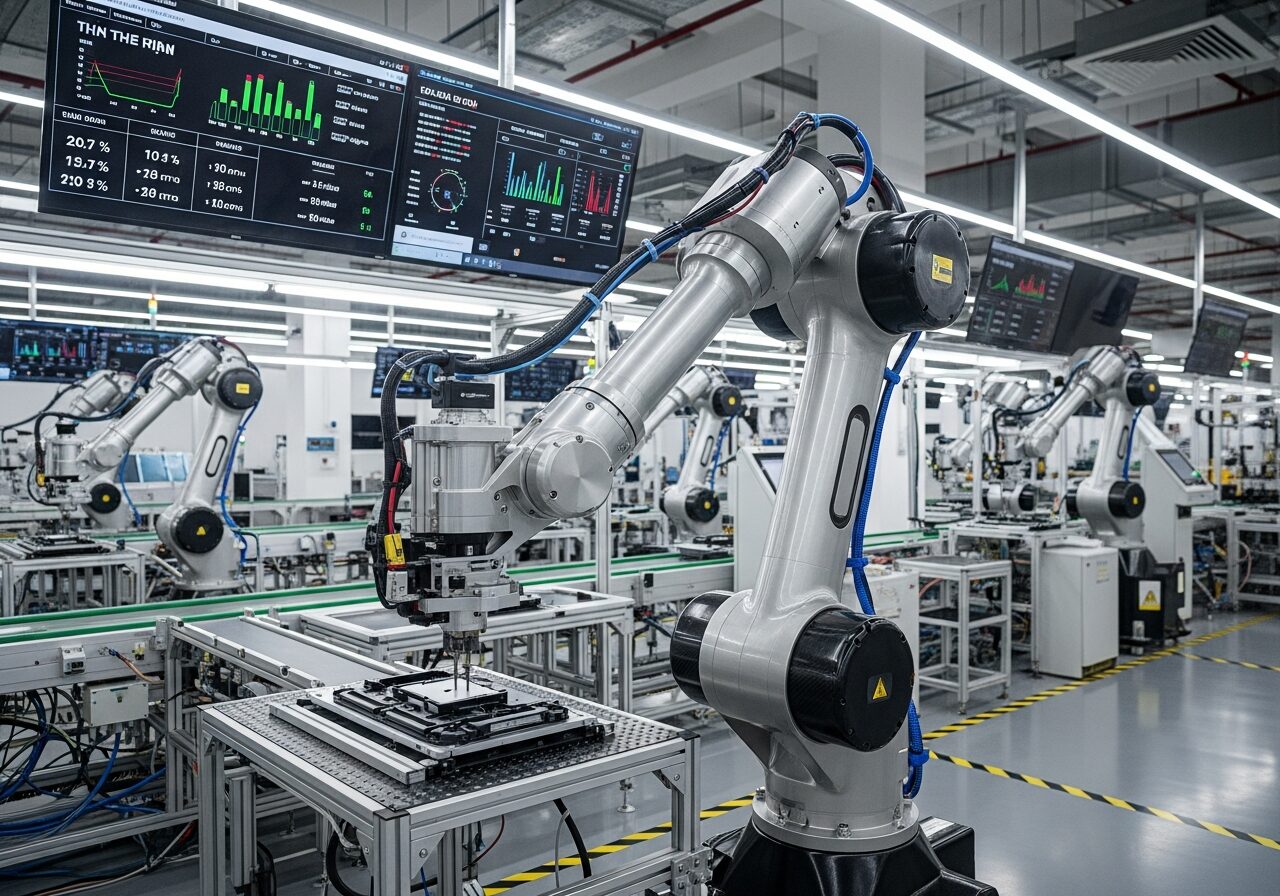
Utilization of automatic screw fastening machines and screw feeders: Automatic screw fastening machines automate the entire process from screw feeding to fastening, significantly reducing operator burden. This can shorten cycle time by 30% to 70%. Introducing screw feeders eliminates the time spent manually picking up screws, thereby improving work efficiency.
Multi-spindle simultaneous fastening by robots: Combining multi-spindle screw fastening machines, which fasten multiple screws simultaneously, with robots allows for fastening 2 to 10 screws at once, dramatically improving productivity.
Implementation examples and effects: One electronics component manufacturer successfully reduced assembly time per product by 40% and labor costs by 25% after introducing automatic screw fastening machines.
2. Optimization of Tools and Jigs
Selecting appropriate tools and jigs directly impacts work efficiency and quality.
Selection of electric screwdrivers and torque-controlled screwdrivers: Compared to air screwdrivers or manual screwdrivers, electric screwdrivers can fasten with stable torque, reducing work time by 10% to 30%. Torque-controlled screwdrivers automatically stop at the set torque, preventing insufficient or overtightening and stabilizing quality.
Prevention of human errors with Poka-Yoke tools: Poka-Yoke (mistake-proofing) tools detect missed or double fastenings and alert the operator, reducing human errors by 80% to 99%. For example, a mechanism where the next component is not supplied until a fastening completion signal is received.
Positioning and improved workability with dedicated jigs: Introducing dedicated jigs that accurately position components eliminates the effort of searching for screw holes, reducing work time. It also helps reduce operator fatigue by eliminating awkward postures.
3. Improvement of Work Procedures and Layout
Reviewing operator movements and line arrangements eliminates invisible waste.
Motion analysis and standardization using IE (Industrial Engineering) methods: Detailed analysis of operator movements using IE methods identifies wasted motions and waiting times. This allows for establishing and standardizing the most efficient work procedures, potentially improving work efficiency by 15% to 25%.
Optimization of parts supply methods: Utilizing one-way supply, where parts are supplied only when needed, or parts feeders (devices that automatically supply parts) can reduce parts search time by 10% to 20% and minimize operator’s part-picking movements.
Shortening operator travel paths and ensuring ergonomic postures: Re-evaluating the placement of tools and parts to minimize operator travel paths reduces movement time. Ergonomically improved layouts contribute to fatigue reduction and productivity improvement.
4. Data Utilization and Quality Control
Utilizing fastening data enables visualization of quality and early detection of anomalies.
Real-time monitoring and recording of fastening torque data: Real-time monitoring and recording of fastening torque data obtained from torque-controlled screwdrivers and automatic screw fastening machines ensure that all screws are fastened according to specifications. This is expected to reduce the fastening defect rate by 50% to 90%.
Prevention of defect outflow through anomaly detection and early response: If an abnormal torque value is detected, an immediate alert is issued, and the line is stopped, preventing defective products from flowing to the next process. This significantly contributes to reducing rework and preventing customer complaints.
Key Effects of Screw Fastening Process Improvement
Item
Estimated Improvement Effect
Cycle Time Reduction
30%~70%
Human Error Reduction
80%~99%
Fastening Defect Rate Reduction
50%~90%
Overall Productivity Improvement
15%~40%
Return on Investment (ROI) Period
1 year~3 years
Source: Based on Ohta Vietnam’s performance data and industry survey reports
Ohta Vietnam’s Proposed Smart Fastening Solutions
Addressing assembly line challenges in Vietnamese manufacturing, particularly the efficiency and quality stabilization of screw fastening processes, is a specialty of Ohta Vietnam. We optimize advanced Japanese technology and know-how for Vietnamese manufacturing sites, offering smart fastening solutions that support our customers’ competitiveness.
Ohta Vietnam has built an an extensive track record and robust support system locally in Vietnam, having introduced solutions to over 50 Vietnamese companies and Japanese companies operating in Vietnam. Our strength lies not merely in providing products, but in our system integration capabilities to thoroughly analyze the overall situation of our customers’ production lines and propose optimal, customized solutions tailored to their specific needs.
Specifically, we offer the following solutions:
Provision of Japanese-quality automatic screw fastening machines, electric screwdrivers, and screw feeders: We carefully select fastening equipment equipped with the latest Japanese technology, known for high precision and durability, and propose them according to the customer’s production scale and product characteristics. Through their introduction, the productivity of client companies has improved by an average of 15% to 40%, and the defect rate has been reduced by an average of over 70%.
Customized proposals and system integration tailored to customer production lines: We develop bespoke solutions, such as integration into existing customer lines or the design and manufacture of dedicated jigs for specific product shapes.
Post-implementation maintenance, training, and technical support: To ensure stable operation after implementation, we provide prompt maintenance services by local Vietnamese staff. We also conduct detailed training for customer operators on equipment operation and troubleshooting, facilitating technology transfer.
Consulting and improvement proposals for the entire fastening process: We also offer consulting for overall assembly line productivity improvement. From current state analysis using IE methods to the planning and execution support of specific improvement plans, we provide consistent support, with an estimated Return on Investment (ROI) period of 1 to 3 years, allowing for early realization of investment effects.
Ohta Vietnam aims to be a partner that creates the future of Vietnamese manufacturing with our customers and supports sustainable growth. Please feel free to contact us for solutions to your assembly line challenges.
Summary
This article has explained time reduction techniques for screw fastening processes in Vietnamese manufacturing. To respond to rapidly changing market environments and increasing quality demands, improving this critical process is essential.
Time reduction in screw fastening processes brings a wide range of benefits, including productivity improvement, quality stabilization, and cost reduction. To achieve this, a multi-faceted approach combining the introduction of automation and semi-automation, optimization of tools and jigs, improvement of work procedures and layout, and quality control through data utilization is key to success.
Ohta Vietnam addresses these challenges faced by Vietnamese manufacturers by providing Japanese-quality smart fastening solutions and meticulous local support rooted in Vietnam. From customized proposals optimized for your production line to post-implementation technical support and consulting for the entire process, we offer consistent services to strongly support your sustainable growth.
To take the first step towards improving your assembly line, please consult Ohta Vietnam. We look forward to contributing to strengthening your competitiveness and realizing your future smart factory.
Conclusion
For inquiries regarding samples or materials, please respond to this email or contact our sales representative!
At Ohta Vietnam, we not only provide ready-made products such as screws and bolts, but also support activities in the manufacturing field such as cutting, inspection, assembly, packaging…
Our equipment list is here
As a “specialized support” for the manufacturing industry in Asia. If you have any related questions, feel free to contact Ohta Vietnam for detailed support!
URL: https://ohtavn.com/en/contact/