Column
media

media
column
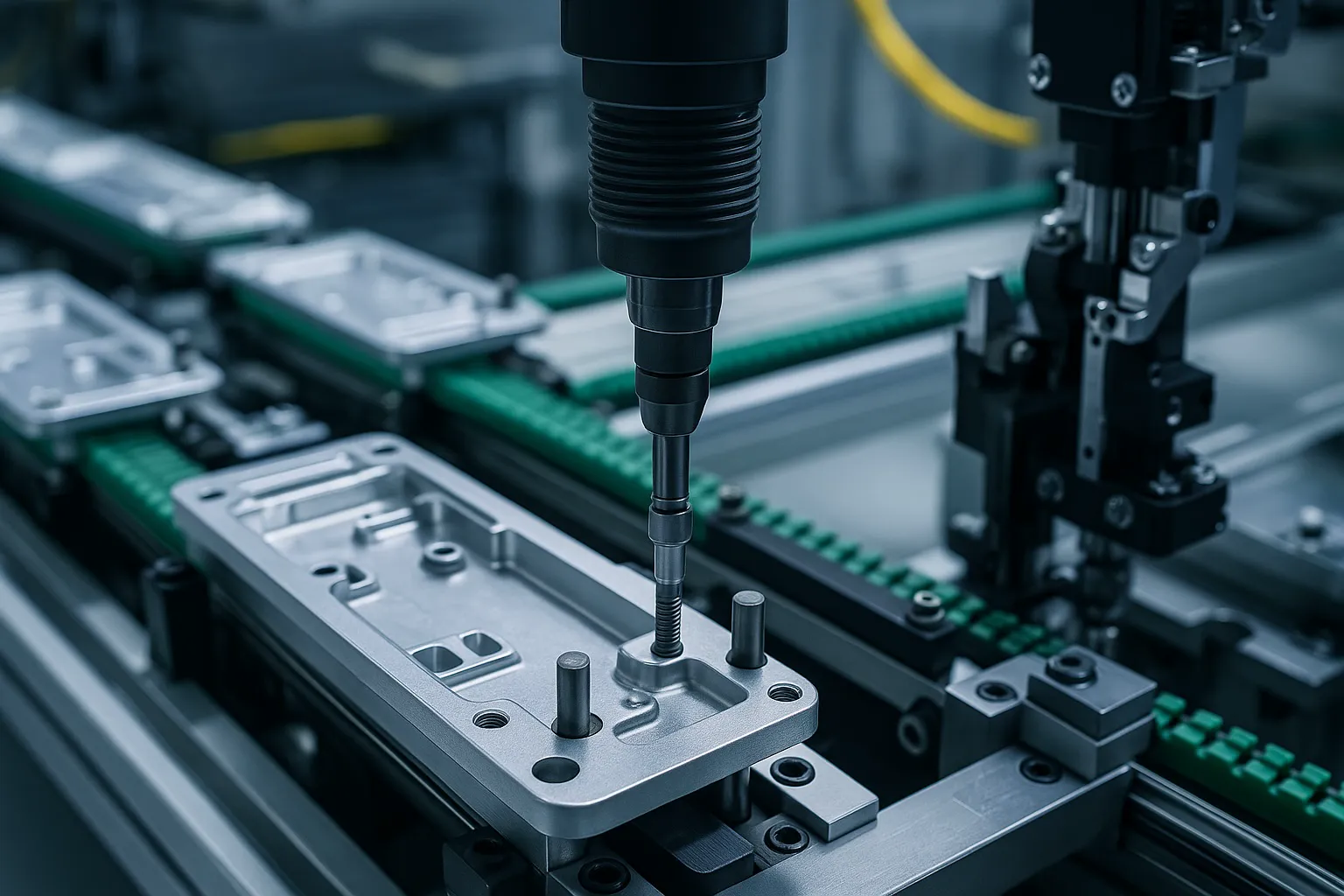
In high-speed production lines, even small differences in work efficiency can directly impact overall production yield and delivery times. Among these, “fastening technology,” which joins components together, is a critical factor for ensuring both quality and productivity. This article is intended primarily for site managers and procurement/quality assurance personnel in manufacturing industries, such as automotive, electronics, and aerospace, who operate high-speed production. The goal is to introduce the latest trends and innovative examples in fastening technology, providing insights for on-site improvement and implementation.
Traditional bolt and nut fastening methods are susceptible to variations in torque and fastening failures, as they depend heavily on the skill of the operator and the condition of the tools. Furthermore, the time required to tighten each fastener often creates a bottleneck that slows down the entire production line.
Today’s manufacturing environment is increasingly dominated by high-mix, low-volume production, making line change flexibility and quick turnaround times essential. This is compounded by complex challenges like the need for labor savings due to workforce shortages, heightened societal demands for quality assurance, and the optimization of cost and lead time in global supply chains that include overseas bases. This backdrop has created a demand for new fastening technologies that are fast, highly accurate, and can be used consistently by anyone.
The latest fastening technologies for high-speed production lines can be broadly categorized into three innovative approaches.
First is “high-speed fastening screws.” These include friction, preset, and posi-lock types, each effective in reducing cycle time and torque variation. For example, a preset type automatically completes fastening once a predetermined torque is reached, ensuring consistent quality regardless of the operator’s skill level.
Next is the “servo press mechanism + CFRTP rivet.” By using Carbon Fiber Reinforced Thermoplastic (CFRTP) as the rivet material, this technology achieves a lighter yet stronger joint than conventional methods. Combining a servo press with high-speed heating technology, it can form a rivet in as little as 7 seconds. This production system is also space-efficient and can be integrated with robots.
Finally, “IoT and AI-based torque and history management” is also crucial. By utilizing current-controlled drivers and torque sensors, fastening status can be monitored in real-time, preventing defects and ensuring traceability. Combining this with AI analysis can automatically determine optimal fastening conditions for each process, simultaneously improving productivity and quality.
In the automotive industry, switching from traditional bolts and nuts to high-speed fastening screws has drastically reduced the fastening time per fastener, resulting in an 80% reduction in cycle time and a 20% decrease in overall line man-hours. Digitally managing torque history also makes it easy to provide data during quality audits, increasing customer trust.
In the field of electronics assembly, stability in the micro-torque range is paramount. By implementing the latest drivers and control systems, the rate of stripped screws (a common defect) was reduced by 50%, while cycle time was shortened by 10%. This balances high-precision product quality with production efficiency.
In Vietnamese manufacturing, the adoption of locally sourced high-speed fastening screws is accelerating. This has shortened transportation lead times by 30% and reduced procurement costs by 15%, achieving a return on investment (ROI) in just four months. It has also improved the operating rate of high-mix, low-volume lines by 20%.
Furthermore, the application of CFRTP rivets has begun in the aerospace and automotive sectors. Leveraging their lightweight and high-strength properties, and combined with a servo press mechanism, they enable high-speed and space-saving fastening that was previously difficult, also contributing to increased product design freedom.
When introducing new fastening technology to a high-speed production line, a phased approach is most effective. The starting point is to visualize the current cycle time and defect rate to clearly define the challenges. Next, select the technology that best fits your products and line configuration, such as friction or preset screws, or a servo press. Then, conduct a small-scale trial implementation to collect real data and verify the effects.
Using IoT for torque management and fastening history provides a solid foundation for your quality assurance system. If you have overseas operations, it is crucial to actively incorporate local procurement to optimize costs and lead times. Additionally, long-term stable operation is possible by establishing operator training and a maintenance system.
For a procurement and quality management checklist, it is recommended to include items such as “checking fastener tool and component specification conformity,” “saving and utilizing torque management data,” “regular equipment inspections,” and “collaboration with local partners” to maximize the benefits of the implementation.
The innovative cases presented in this article demonstrate that multiple benefits—including increased speed, stable quality, labor savings, and global optimization—can be achieved. High-speed fastening screws streamline conventional processes, while CFRTP rivets are gaining attention as a new option that balances lightweight with high strength. Furthermore, integrating AI and IoT enables real-time quality assurance and predictive maintenance, paving the way for smart factories.
When considering implementation, it’s crucial to first conduct a trial run on a small line or a specific process to verify the effects with data. Then, by proceeding with a company-wide rollout, you can maximize your return on investment and build a stable production foundation.
For inquiries regarding samples or materials, please respond to this email or contact our sales representative!
At Ohta Vietnam, we not only provide ready-made products such as screws and bolts, but also support activities in the manufacturing field such as cutting, inspection, assembly, packaging…
Our equipment list is here
As a “specialized support” for the manufacturing industry in Asia. If you have any related questions, feel free to contact Ohta Vietnam for detailed support!
URL: https://ohtavn.com/en/contact/