Column
media

media
column
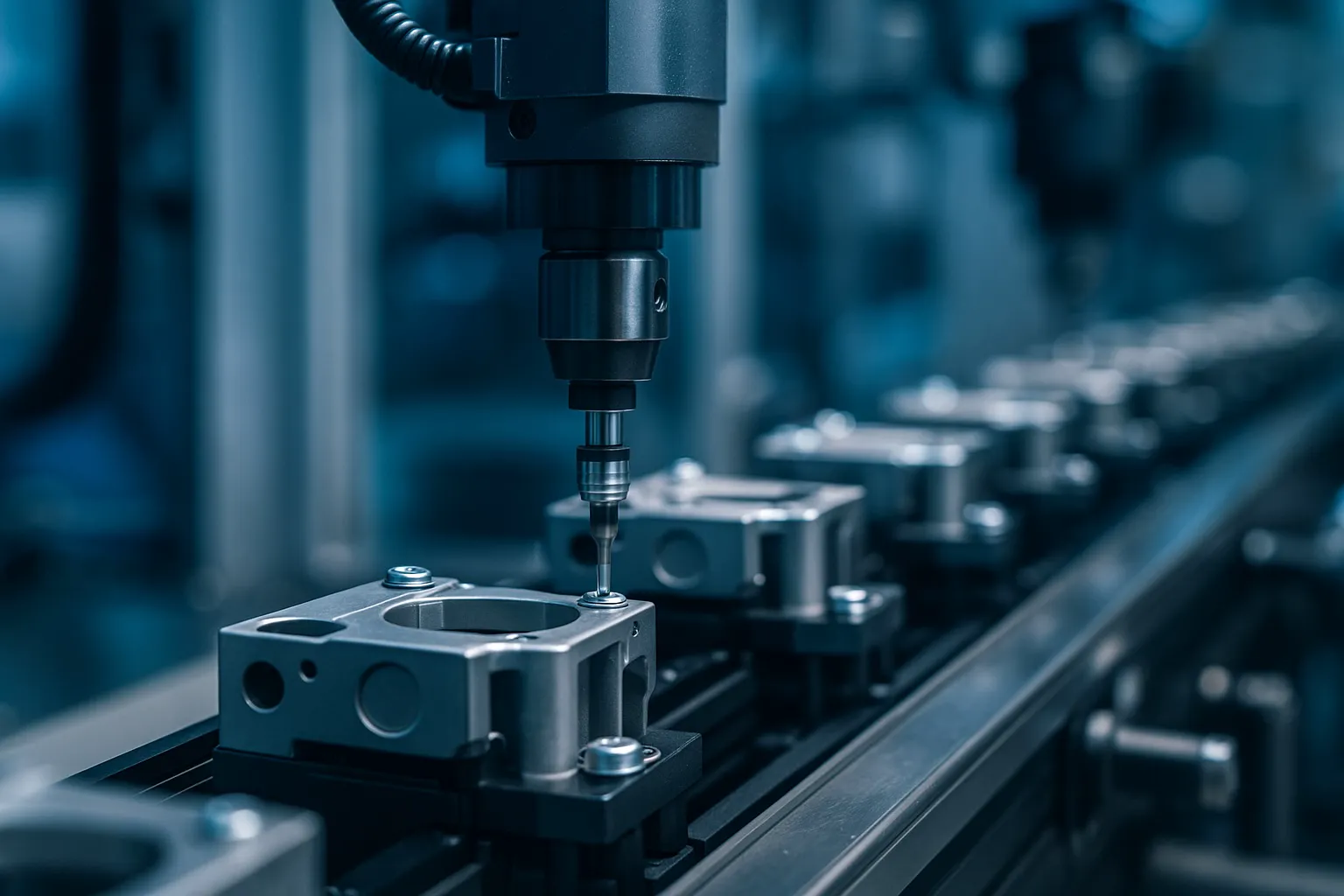
In manufacturing, screw fastening is a fundamental yet critical process that significantly impacts quality and productivity. Traditionally, it has heavily relied on operator skill, leading to issues like human variation and workload. Recently, the integration of “automation equipment” and “screw fastening technology” has gained attention as a new solution to address labor shortages and quality assurance demands. This article explains everything from the basics of screw fastening automation to the latest technological trends and practical applications in manufacturing sites, including in Vietnam. The intended readers are production engineers, procurement personnel, and quality control staff.
Screw fastening is a foundational process common to all manufactured products. Screws are essential for securely fixing components in various industries, including electronics, automobiles, home appliances, and building materials, and their quality directly links to the reliability of the final product. However, traditional manual work has presented challenges such as variations in tightening torque due to operator skill, limitations in work efficiency, and fatigue from long hours.
In recent years, the manufacturing industry has also been pressured to balance labor shortages with increased productivity. In particular, at global bases in Asia, rising labor costs have made labor-saving measures an urgent priority. Furthermore, from a quality assurance perspective, including environmental considerations and traceability, the need for automation equipment that can numerically manage and record screw fastening data is growing. Against this backdrop, screw fastening automation is attracting attention as a solution that simultaneously achieves “cost reduction,” “quality stability,” and “reduction of operator workload.” It is not just about automating manual tasks but is a fundamental technology that directly leads to the streamlining of the entire production line and the enhancement of international competitiveness.
The technology for automated screw fastening equipment has evolved significantly in recent years. There are three main types of devices: “handheld,” “automatic,” and “robotic,” each with its own characteristics and implementation benefits. Handheld types automate screw feeding and torque control while being operated by a worker, balancing work efficiency with quality. Automatic types are suitable for mass production as they efficiently fasten screws to workpieces fixed in a jig. Robotic types use cameras and sensors to automatically recognize screw locations, allowing for flexible process handling. Therefore, their implementation is advancing in environments that require high-mix, low-volume production and high precision.
Furthermore, the essential torque management for screw fastening has shifted from relying on human feel to numerical control by sensors. This enables precise management based on international standards like JIS and ISO, making it easier to ensure product-specific quality and meet customer requirements. In addition, the fusion with IoT now allows for the real-time collection and recording of equipment operational status and screw fastening torque data. This brings into view enhanced quality traceability, predictive maintenance for devices, and even the optimization of the entire production line. The seemingly simple process of screw fastening, when combined with the latest automation equipment, is now playing a central role in digitalization and the move toward smart factories.
In recent years, Vietnam has been increasing its presence as a leading manufacturing hub in Asia. Many foreign companies have expanded into sectors like electronics, automotive parts, and home appliances, and the demand for automating the screw fastening process is rapidly growing. This is driven by rising labor costs and a shortage of skilled workers, making the adoption of automation equipment a key measure to maintain productivity while stabilizing quality.
A real-world example of implementation is a smartphone assembly line using a robotic screw fastening machine. By combining camera and sensor-based position detection with torque management, it has stably fastened screws to delicate electronic circuit boards. As a result, work efficiency has reportedly improved by 20-30%, and the defect rate has been significantly reduced. Furthermore, an automotive parts manufacturer introduced a tabletop automatic screw fastening machine to handle high-mix, low-volume production. This shortened setup times and enabled traceability, building a system that meets the quality demands of global customers.
Ohta Vietnam provides comprehensive support for these sites, from “selecting screw specifications” and “optimizing fastening torque” to “evaluating automation equipment.” They have a system in place to maximize implementation benefits, including local material procurement and after-sales support. This allows companies to not only cut costs but also build a production system that enhances their international competitiveness.
To successfully implement screw fastening automation, a consistent checklist from the pre-implementation phase to operation is essential. Here is a practical checklist.
Procurement and Design Phase
Quality Management Phase
Operation and Maintenance Phase
By systematically implementing these practices, you can maximize the benefits of automation equipment and lead to defect reduction and cost optimization.
The collaboration between screws and automation equipment goes beyond mere operational efficiency and directly contributes to quality assurance, traceability, and the creation of a sustainable production system. Especially in rapidly growing manufacturing hubs like Vietnam, balancing labor savings and quality stability is a crucial key to competitiveness.
Ohta Vietnam provides comprehensive support, combining expertise in screws with knowledge of automation equipment, from local procurement to the utilization of IoT. We hope that readers will reconsider the potential of screw fastening automation in their own processes and take a step toward the manufacturing floor of the future.
For inquiries regarding samples or materials, please respond to this email or contact our sales representative!
At Ohta Vietnam, we not only provide ready-made products such as screws and bolts, but also support activities in the manufacturing field such as cutting, inspection, assembly, packaging…
Our equipment list is here
As a “specialized support” for the manufacturing industry in Asia. If you have any related questions, feel free to contact Ohta Vietnam for detailed support!
URL: https://ohtavn.com/en/contact/