Column
media

media
column
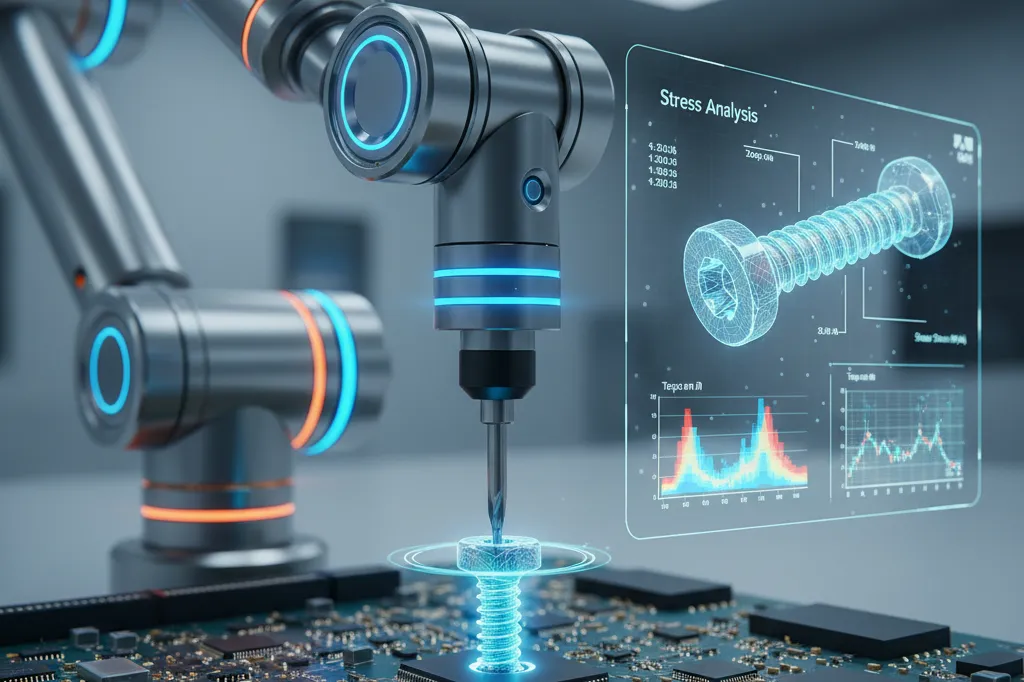
In Vietnam’s manufacturing industry, the most fundamental yet most critical component that underpins product quality and competitiveness is the “screw.” However, despite its importance, procurement sites still face deep-rooted challenges such as “the inability to consistently obtain products of the required quality,” “the lack of support for high-mix, low-volume production for prototypes,” and “concerns about the quality control systems of suppliers.” In an era of increasing product miniaturization and sophistication, the requirements for fastening parts can no longer be met simply by being “JIS standard compliant”.
This article will detail the latest screw technologies that exceed industry standards, such as anti-loosening, lightweight and high-strength properties. It will also explain practical strategies for how to procure these in Vietnam and link them to a competitive advantage. Here, you will find concrete hints to elevate your product’s value to the next level.
Why are screws, often seen merely as a cost, now being re-evaluated as “strategic components” that influence a company’s competitiveness? The background lies in the unique environment faced by Vietnam’s manufacturing industry and the increasing sophistication of demands on the products themselves.
Vietnam is experiencing rapid growth as a global factory, and its manufacturing PMI has remained on an expansionary trend, exceeding 50 in many months of 2024. However, on the other hand, supply chains have become more complex, and parts procurement comes with its own unique difficulties. In particular, local suppliers that can meet the high quality standards demanded by Japanese companies are still limited, and quality variation remains a significant risk.
In fact, according to a JETRO survey, approximately 45.7% of Japanese companies operating in Vietnam cite “securing the quality of employees” as a management challenge, which is directly linked to the quality control capabilities on the manufacturing floor.
Furthermore, modern market needs are now mainstreaming “high-mix, low-volume” production based on just-in-time (JIT) principles, and an increasing number of suppliers based on traditional mass-production models are unable to keep up with this change. We are in an era where the existence of a partner who can stably supply custom screws in units of a few pieces with the required quality and delivery time can determine the success or failure of a business.
Product evolution constantly raises the demands on fastening components.
For example, the electronics field requires micro screws to secure internal circuit boards in smartphones, while the automotive sector needs special alloy bolts that combine light weight with high strength for battery units accompanying the shift to EVs. For instance, while a standard steel small screw (strength class 4.8) has a tensile strength of about 400 N/mm², titanium alloy bolts used in the aerospace field are often required to have performance exceeding 1,100 N/mm². To ensure product reliability, added values such as an “anti-loosening function” that prevents loosening even in harsh environments with vibration and temperature changes, and “galvanic corrosion prevention” from contact between dissimilar metals, are essential. These demands can no longer be satisfied merely by meeting the dimensions and mechanical properties stipulated in JIS standards; they require solutions based on advanced technical knowledge spanning materials, surface treatments, and even shape design.
To meet sophisticated demands that standard products cannot handle, screw technology is constantly evolving. Here, we introduce three advanced technologies that dramatically enhance a product’s added value.
The loosening of screws is the greatest enemy, directly leading to product failures and serious accidents. Various approaches in anti-loosening technology have been developed to address this challenge. Representative examples include the “prevailing torque type,” where a nylon resin is fused to a part of the screw to prevent loosening through its frictional resistance, and the “wedge-locking method,” which physically locks against loosening using a cam mechanism of a pair of washers. In recent years, the “pre-coated type,” where an anaerobic adhesive is microencapsulated and applied to the screw beforehand, has also become widespread. When tightened, the capsules break and the adhesive cures, exerting a strong bonding force and sealing effect. This method significantly improves work efficiency and is increasingly adopted in fields requiring particularly high reliability, such as automotive engine parts and construction machinery. These technologies greatly contribute to the reduction of life-cycle costs through maintenance-free operation.
The demand to be “light, strong, and rust-free” is an eternal theme common to all products. Solving this challenge is the combination of new materials and surface treatment technologies. Screws made from “titanium alloy,” which has about 60% of the weight of steel but equal or greater strength, and “aluminum alloy,” a prime example for weight reduction, are indispensable for lightening products such as drones, robots, and medical equipment. However, these materials have a weakness in that they are prone to galvanic corrosion (corrosion due to potential differences) when in contact with dissimilar metals. This is where surface treatment becomes crucial. For example, applying an anodic oxidation treatment (alumite) to aluminum can significantly improve its corrosion resistance and insulating properties. Another technology attracting attention in recent years is “PVD (Physical Vapor Deposition) coating.” This is a technique that forms a thin film on the product surface by ionizing a metal in a vacuum, which can dramatically enhance wear and heat resistance and is also applied to cutting tools and molds.
“Smart screws” are gaining attention as a trump card to accelerate the digital transformation (DX) of the manufacturing industry. These are screws with built-in strain gauges, temperature sensors, and wireless communication modules, allowing for the real-time, accurate measurement and recording of the axial force during tightening. Traditionally, “torque management” using a torque wrench was common, but due to variations in the friction coefficient, the axial force could vary by 20-30% even when tightened to the same torque. Smart screws fundamentally solve this problem by directly monitoring the “axial force.” Furthermore, they enable “predictive maintenance” by constantly monitoring the axial force of screws in remote equipment and issuing an alert before loosening occurs. This is expected to dramatically improve the safety of all structures, from social infrastructure like bridges and wind power turbines to factory production equipment.
Note: This is the latest updated technology, and the information is provided for reference purposes only.
How can these advanced technologies be utilized on the manufacturing floors in Vietnam? The key to success lies in a procurement strategy based on collaboration with a reliable partner and the establishment of a thorough quality control system.
To support products in the research and development stage or custom items for each client, it is necessary to procure custom screws in units as small as a few pieces with a short delivery time. However, it is not easy to find a manufacturer in Vietnam that can flexibly meet these demands. What is effective here is collaboration with a partner who can leverage the extensive supplier network of their Japanese headquarters.
For example, we at Ohta Vietnam can fully utilize the network of over 300 partner companies that our parent company, Ohta Co., Ltd., has cultivated over many years in Japan. This allows us to stably supply products of Japanese quality in small lots, even for special materials or items with complex shapes that are difficult to procure in Vietnam. Instead of simply selling catalog products, we select the optimal manufacturing method and supplier from a single customer drawing and act as a procurement agent. This is precisely the solution required in the era of high-mix, low-volume production.
Even if you procure advanced parts, they are meaningless if their quality is not guaranteed. Especially in overseas procurement, it is essential to establish an in-house incoming inspection system. It is necessary not only to obtain ISO9001 certification but also to have high-precision inspection equipment such as image-based dimension measuring systems and coordinate measuring machines, and to have a system for rigorously inspecting parts delivered from suppliers, either for all units or on a per-lot basis.
At Ohta Vietnam, we possess this inspection equipment in-house and act as a quality gatekeeper on behalf of our customers. In the unlikely event that a non-conforming product is discovered, we promptly investigate the cause and take corrective action to minimize the impact on the production line. Ensuring traceability by assigning a unique management number to each part and making the entire process from material certification (mill sheet) to processing and inspection traceable is the lifeline of high-quality manufacturing.
Sources: Fortune Business Insights, Ministry of Foreign Affairs of Japan, APEC, Asian Development Bank
This article has explained the modern challenges facing screws as fastening components, the advanced technologies to overcome them, and practical strategies for procurement and utilization in Vietnam. As products become more sophisticated and markets more diversified, screws are no longer mere components but strategic elements that determine a product’s value. Technologies such as anti-loosening, lightweight and high-strength properties, and IoT integration will bring reliable credibility and a competitive advantage to your products. However, to leverage these advanced technologies, the existence of a reliable procurement partner who can meet the demands of high-mix, low-volume production and has a thorough quality assurance system is indispensable.
Ohta Vietnam utilizes the extensive network of its Japanese parent company, its rich experience in Vietnam, and its in-house inspection equipment to solve customers’ complex procurement challenges in a one-stop manner. From the procurement of a single screw to the optimization of the entire supply chain, please feel free to consult with us.
For inquiries regarding samples or materials, please respond to this email or contact our sales representative!
At Ohta Vietnam, we not only provide ready-made products such as screws and bolts, but also support activities in the manufacturing field such as cutting, inspection, assembly, packaging…
Our equipment list is here
As a “specialized support” for the manufacturing industry in Asia. If you have any related questions, feel free to contact Ohta Vietnam for detailed support!
URL: https://ohtavn.com/en/contact/