Column
media

media
column
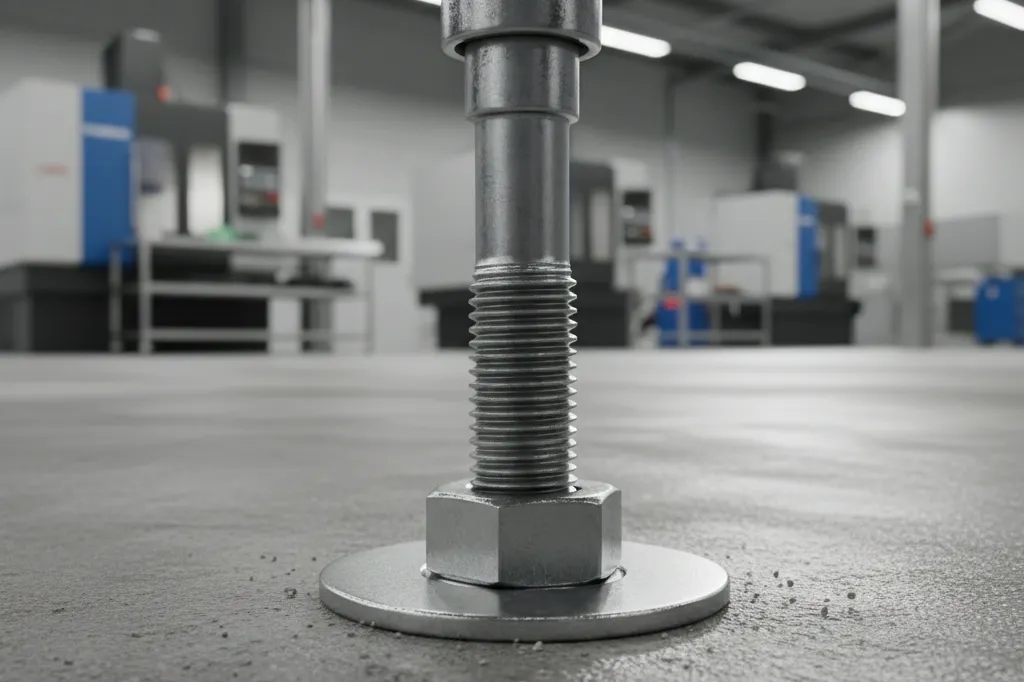
“Anchor bolts” are indispensable for installing machine tools in factories and maintaining the structure of buildings. These parts, which firmly connect equipment and structures to concrete floors or foundations, are truly the “unsung heroes” of the manufacturing site. However, if appropriate selection or installation is not performed, there is a risk of serious accidents such as overturning during earthquakes or equipment detachment. In fact, data shows that a high percentage of construction defects related to structural hardware are found during inspections of new construction, making correct knowledge the cornerstone of safety management.
In this article, we will explain everything from basic types of anchor bolts to the concept of strength calculation and installation points to note on-site, in content that can be read in 3 minutes for procurement and maintenance personnel in the manufacturing industry. Please use this for your company’s safety measures together with the procurement solutions provided by Ohta Vietnam.
Anchor bolts are a general term for bolts that are embedded in a base material (mainly concrete) and use their tensile strength and shear strength to fix an object. Their fixing principles are mainly classified into the following three types.
Anchors handled at manufacturing sites are largely divided into “Cast-in-place anchors” and “Post-installed anchors”.
This type is installed before pouring concrete. They are L-shaped or J-shaped, and have the highest structural strength and excellent reliability. They are used for foundations of large machinery and fixing pillars of buildings. At Ohta Vietnam, production and supply in custom sizes based on drawings are possible.
This type is installed after drilling holes in existing concrete floors. They are frequently used for factory layout changes and fixing additional equipment.
To select the appropriate anchor, it is necessary not only to match the size but also to calculate the strength.
The force an anchor can withstand (allowable tensile load) adopts the smaller value of the following two failure modes.
Even in simple selection, instead of using the catalog value “maximum tensile load” as is, it is necessary to use the “allowable load” divided by a safety factor (3 for long-term load, 1.5 to 2/3 for short-term load) as a guide.
The most common cause of failure in post-installed anchors is “insufficient hole cleaning (removal of drilling dust).” Especially in the case of chemical anchors, if dust remains, the resin will not adhere to the concrete wall surface, and the strength will drop significantly. Thoroughly cleaning using a dedicated dust pump or brush is an absolute condition for achieving the strength specified in the catalog specs.
Anchor bolts are one of the most important parts supporting the safety and stable operation of factories. Selection must be made by comprehensively considering not only cost and workability but also the weight of the target equipment, the presence of vibration, and the concrete strength of the installation location.
As a TRUSCO (Orange Book) distributor, Ohta Vietnam can procure and supply reliable anchor bolts from major manufacturers such as Sanko Techno and Unika within Vietnam. We also accept requests for in-house production of custom-sized foundation bolts and L-shaped anchors based on drawings. Please feel free to consult us if you are having trouble selecting anchors for equipment relocation or new installation.
For inquiries regarding samples or materials, please respond to this email or contact our sales representative!
At Ohta Vietnam, we not only provide ready-made products such as screws and bolts, but also support activities in the manufacturing field such as cutting, inspection, assembly, packaging…
Our equipment list is here
As a “specialized support” for the manufacturing industry in Asia. If you have any related questions, feel free to contact Ohta Vietnam for detailed support!
URL: https://ohtavn.com/en/contact/