Column
media

media
column
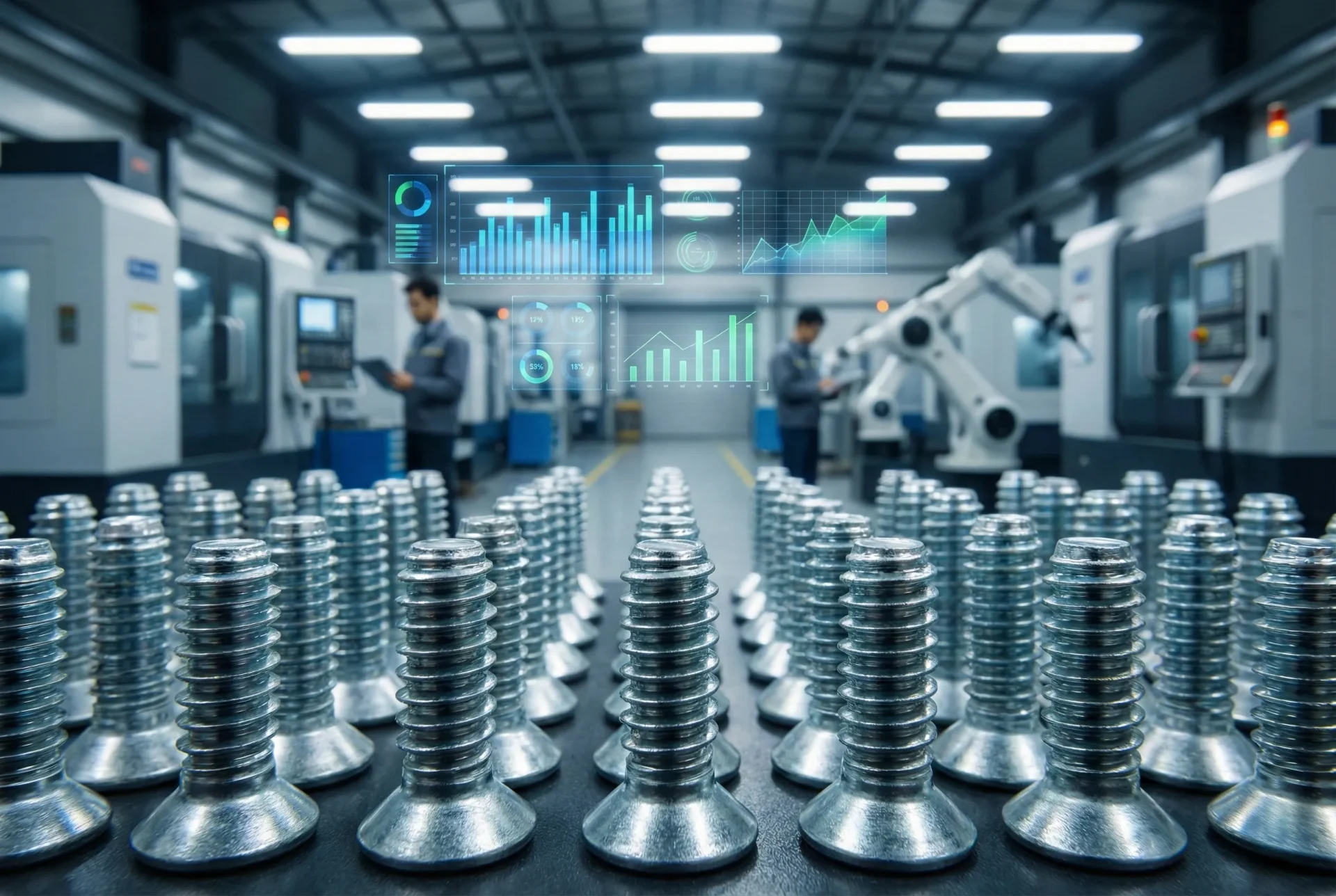
In manufacturing, ensuring long-term product life and reliability is an eternal challenge. Particularly in high-temperature, high-humidity environments like Vietnam, metal parts can corrode much faster than expected, potentially leading to fatal product defects. Among these risks, “Dissimilar Metal Contact Corrosion” (Galvanic Corrosion, commonly known as electrolytic corrosion), which occurs when different types of metals come into contact, is a risk often overlooked during the design stage.
This article provides a thorough explanation of the scientific mechanisms behind dissimilar metal contact corrosion, practical knowledge of potential differences, and anti-corrosion measures recommended by Ota Vietnam. By reading this article, you will gain specific guidelines to minimize recall risks due to incorrect fastening component selection and establish a cost-effective procurement strategy.
Dissimilar metal contact corrosion refers to a phenomenon where, in an environment containing an electrolyte solution (such as moisture or rainwater), different types of metals come into contact, causing an electric current to flow due to the difference in “corrosion potential (ionization tendency)” between them. This results in the metal with the lower potential (the anode) corroding severely. In essence, it is a state where a “battery” is unintentionally formed.
For example, if a stainless steel plate is fixed with aluminum screws, the aluminum side will corrode rapidly because its potential is lower, acting as a “sacrificial” metal. This phenomenon can progress several to dozens of times faster than simple oxidation, making it feared as a “silent killer” in the manufacturing industry.
For electrolytic corrosion to occur, the following three conditions must be met simultaneously:
In Vietnam’s factory environments, where average humidity often exceeds 80%, the “presence of an electrolyte” is a constant reality. Therefore, stricter measures are required compared to those used in Japan.
When designers select screws, the most important indicator is the “corrosion potential.” Every metal has its own specific potential, and the greater the difference, the stronger the corrosion energy becomes.
To ensure stable operations in Vietnam, simply choosing “rust-resistant screws” is not enough. A total design that considers compatibility with surrounding components is necessary. Ota Vietnam recommends the following four approaches:
In recent years, Ota Vietnam has also been proposing environmental monitoring using sensors to meet the needs of smart factories. By measuring factory humidity and salt concentration in real-time and issuing alerts when the risk of corrosion increases, maintenance cycles can be optimized. This prevents line shutdowns due to sudden part breakage and enables planned component replacement.
We have created a checklist for measures against dissimilar metal contact corrosion that can be used immediately on-site. Procurement and purchasing departments are encouraged to use this during meetings with suppliers.
Ota Vietnam provides technical consultations based on these items. We have an extensive database of failure cases in the local region, allowing us to support you in avoiding “pitfalls” during the design stage.
Dissimilar metal contact corrosion (electrolytic corrosion) is a phenomenon that can be sufficiently prevented by correctly understanding the properties of metals and implementing appropriate measures. However, in Vietnam’s uniquely hot and humid climate and increasingly complex supply chains, even a slight lack of knowledge can lead to serious quality troubles. As explained in this article, managing potential differences, implementing insulation measures, and selecting surface treatments suitable for the environment are the three pillars supporting product reliability. Ota Vietnam is not just a screw sales company. We are a partner that combines Japanese-quality technical expertise with a local network in Vietnam to provide the optimal “fastening solution” for our customers’ challenges. If you have concerns such as “currently used screws rust frequently” or “uncertainty about metal combinations in a new product design,” please contact Ota Vietnam. We will do our utmost to enhance your product value and support sustainable manufacturing in Vietnam.
For inquiries regarding samples or materials, please respond to this email or contact our sales representative!
At Ohta Vietnam, we not only provide ready-made products such as screws and bolts, but also support activities in the manufacturing field such as cutting, inspection, assembly, packaging…
Our equipment list is here
As a “specialized support” for the manufacturing industry in Asia. If you have any related questions, feel free to contact Ohta Vietnam for detailed support!
URL: https://ohtavn.com/en/contact/