Column
media

media
column
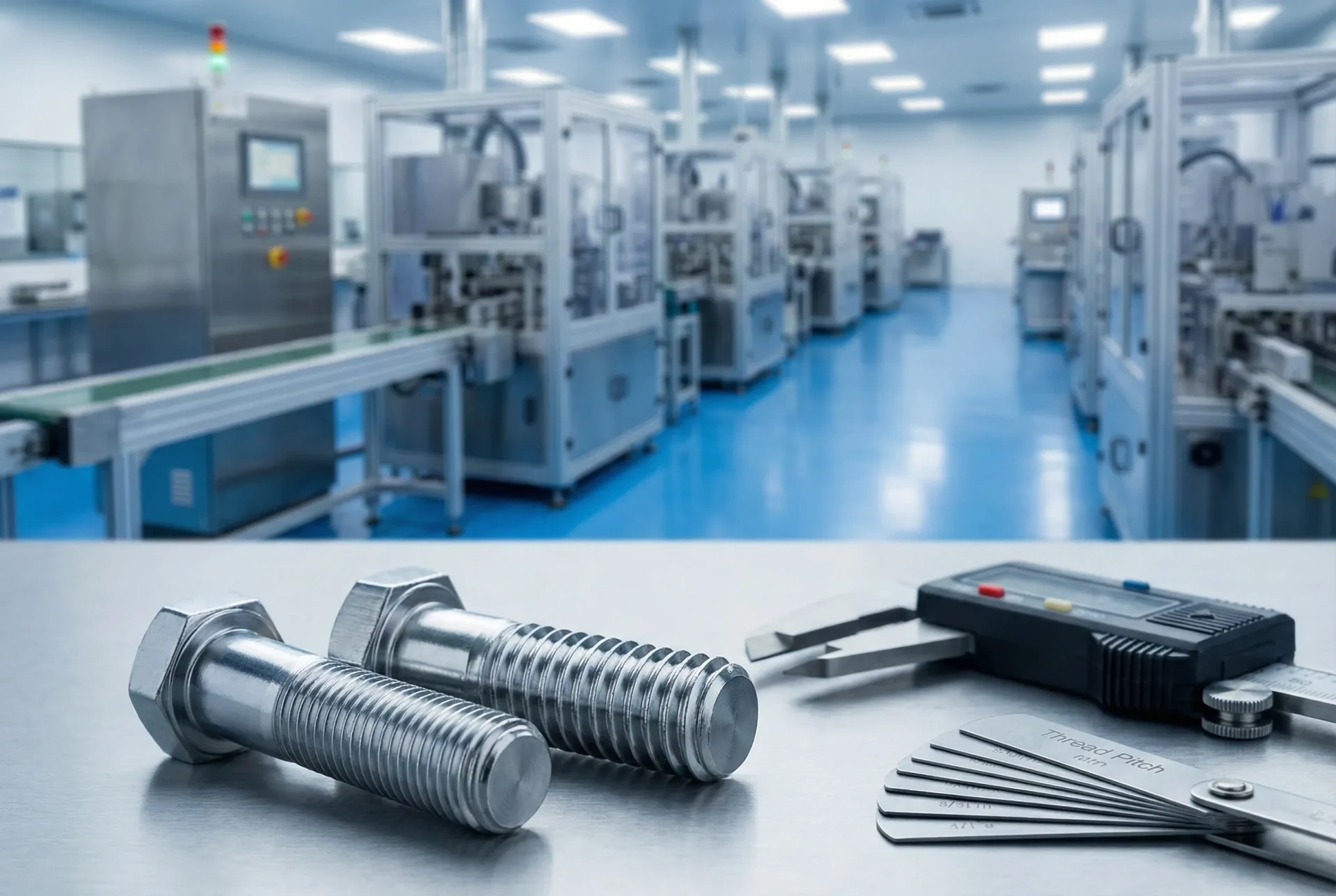
In manufacturing, “screws” are the most fundamental and critical components supporting product reliability. However, in design and procurement, confusion between “metric screws” (the global standard) and “inch screws” (still widely used in aerospace, hydraulic equipment, and products for the U.S. market) can lead to serious trouble. Particularly in Vietnam, which is attracting attention as an overseas production base, the mixture of Japanese, Western, and local standards makes it essential to use the correct type based on accurate knowledge.
In this article, we provide a thorough explanation ranging from the structural differences between metric and inch screws to international standards (ISO, UN, etc.), as well as the “Zero-Mistake” procurement and quality management techniques advocated by Ohta Vietnam. By reading this article, you will acquire specific methods to prevent fastener selection errors and balance cost optimization with quality improvement.
Metric screws are the world’s most widely used screw standard, defined by the ISO (International Organization for Standardization). Nominal diameter (outer diameter) and pitch (the distance between threads) are expressed in millimeters (mm). For example, “M8 x 1.25” indicates an outer diameter of 8mm and a pitch of 1.25mm. The thread angle is fixed at 60°, making calculations easy and versatility high. Japan’s manufacturing standards also comply with these metric threads, offering the advantage of easier component standardization and cost reduction.
On the other hand, inch screws are based on the unit of 1 inch (25.4mm). The current mainstream is the “Unified Thread,” standardized across the United States, Canada, and the United Kingdom. Unified threads include UNC (Unified Coarse) and UNF (Unified Fine). While the thread angle is 60° (same as metric screws), the size notation follows a format like “1/4-20” (meaning a 1/4-inch outer diameter with 20 threads per inch). Furthermore, in older equipment or construction materials, “Whitworth threads” with a 55° thread angle may still exist. Confusing these not only makes physical fastening impossible but also poses a risk of damaging components by forced tightening.
While many Japanese companies use metric screws as their standard, the adoption of inch screws becomes necessary for products exported to North America, construction machinery, aircraft-related parts, or maintenance of old British-style equipment. The key here is not just matching the size, but also understanding the standards for “strength classes” and “surface treatments.” For instance, while metric screw strength classes are labeled as “8.8” or “12.9,” Unified threads use unique notations such as “Grade 5” or “Grade 8.” Misinterpreting these compatibilities can lead to unexpected breakage accidents.
Source: Fasteners Market Size & Trends
The most common trouble on-site is misidentifying Metric and Unified screws by judging them as “looking similar” visually. A 1/2-inch Unified screw (outer diameter 12.7mm) and an M12 metric screw (outer diameter 12mm) look very alike, but they have absolutely no compatibility. Ohta Vietnam recommends always measuring the following four items:
When procuring from suppliers in Vietnam, if drawing instructions are ambiguous, there is a non-zero risk that substitutes (e.g., an inch screw of a similar size delivered when a metric screw was ordered) may be supplied based on local stock availability. To prevent this, it is essential to clearly state ISO standard numbers and strength classes at the time of ordering and to conduct thorough 100% or sampling inspections using “limit gauges” during receiving inspection.
At Ohta Vietnam, we go beyond mere component supply to support DX (Digital Transformation) on the manufacturing floor. For example, by introducing a “Missed-Tightening Prevention System” linked with smart torque wrenches, we digitally record which screw was tightened, when, and with how much torque. This not only detects mix-up errors between metric and inch screws but also ensures traceability for each individual product unit, dramatically elevating the level of quality assurance.
Managing a high-mix, low-volume inventory of screws is a significant burden for procurement officers.
Some companies currently provide VMI (Vendor Managed Inventory) services, installing inventory management racks directly at customers’ factories and automatically replenishing stock based on actual consumption. This allows metric and inch-thread fasteners to be physically separated and managed independently, helping eliminate picking errors by design. Furthermore, by utilizing partner factories within Vietnam, we can also accommodate short-lead-time procurement for specialized Unified screws.
A Japanese construction machinery manufacturer faced challenges with procurement costs and lead times for Unified screws used in export models for North America. Ohta Vietnam intervened and implemented the following measures:
The choice between metric and inch screws is not just a matter of size selection; it is the essence of product safety, compatibility, and global supply chain strategy. Even in today’s metric-dominated world, inch standards remain indispensable in specific industries and regions. Understanding and managing these “differences” correctly is a source of competitive advantage.
If you are facing challenges with mixed standards or unstable procurement routes in your Vietnam manufacturing operations, please consult Ohta Vietnam. We utilize our technical expertise, local network, and the latest digital technology to support your “Optimal Fastening.” Why not start by reviewing your drawings and organizing your standards? Ohta Vietnam will walk with you through every step towards quality improvement and cost reduction.
For inquiries regarding samples or materials, please respond to this email or contact our sales representative!
At Ohta Vietnam, we not only provide ready-made products such as screws and bolts, but also support activities in the manufacturing field such as cutting, inspection, assembly, packaging…
Our equipment list is here
As a “specialized support” for the manufacturing industry in Asia. If you have any related questions, feel free to contact Ohta Vietnam for detailed support!
URL: https://ohtavn.com/en/contact/