Column
media

media
column
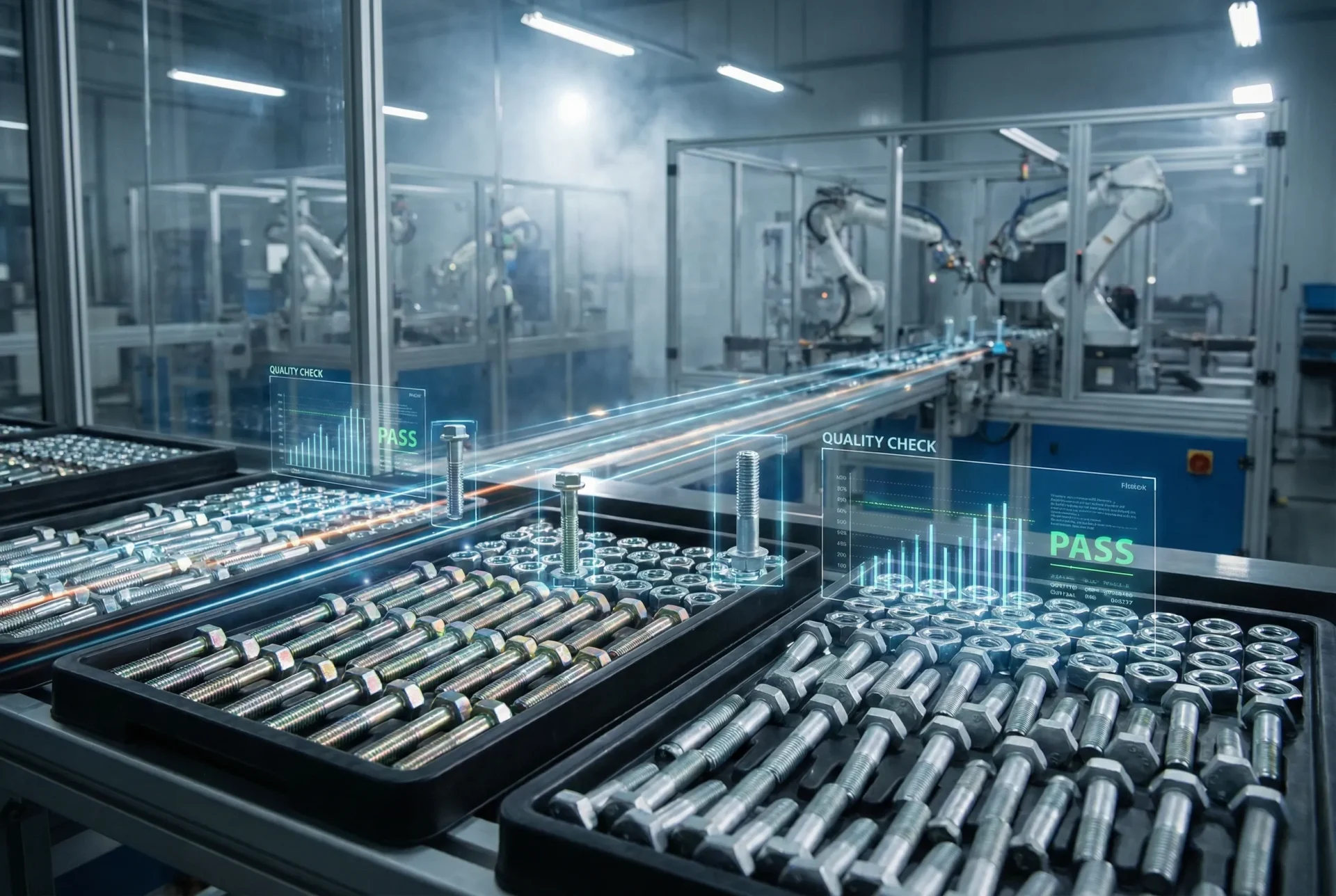
In the manufacturing industry, “rust” occurring on a single screw is more than just a deterioration of appearance. It represents a fatal risk that can lead to the loosening of components due to decreased fastening force or even total machine failure. Especially for manufacturing sites in Vietnam’s hot and humid environment and for products exported from there, selecting the appropriate anti-corrosion treatment (surface treatment) is a critical management decision that directly affects product reliability and brand value.
In this article, from the perspective of Ohta Vietnam – a specialized trading company for screws and fasteners, we will explain representative anti-corrosion treatments such as electro-galvanizing, Geomet treatment, and the use of stainless steel, along with quality control methods using the latest IoT technology, incorporating specific numerical data. We will also present a specific checklist for optimizing the balance between cost and anti-corrosion performance to achieve long-lasting product manufacturing. We hope this report will be of assistance to purchasing and technical managers aiming to optimize procurement in Vietnam.
Economic losses due to metal corrosion are generally said to reach approximately 3% to 4% of the GDP in developed countries. Even in the Japanese manufacturing industry as of 2026, how to suppress this loss is the key to cost competitiveness. Many regions in Vietnam have an average annual humidity exceeding 80%, and the risk of salt damage cannot be ignored in industrial parks located in coastal areas. In such harsh environments, there are many cases where standard anti-corrosion treatments are insufficient.
Currently, the global surface treatment market is required to balance the reduction of environmental impact with high performance. Chromate treatment using “hexavalent chromium,” which was once the mainstream, is strictly restricted by the European RoHS Directive and REACH Regulations. The products provided by Ohta Vietnam use Trivalent Chromium plating or chromium-free anti-corrosion treatments that fully comply with these international environmental regulations as standard. This allows you to use them with confidence in products exported to Japanese and Western markets.
Electro-galvanizing is the most common anti-corrosion treatment. It prevents iron from rusting through “sacrificial protection,” where zinc corrodes before the iron does. Treatments using trivalent chromium typically have a durability of about 72 to 96 hours until white rust appears in salt spray tests, and over 240 hours until red rust appears. Due to its low cost and minimal impact on dimensional accuracy, it is widely adopted for internal fastening in precision equipment.
In fields requiring higher durability, such as automotive parts and civil engineering, film treatments like Geomet are selected. This consists of zinc and aluminum flakes dispersed in a water-based treatment solution, providing several to ten times the corrosion resistance of electro-galvanizing. A notable feature is that the risk of “hydrogen embrittlement” is almost zero. This is an indispensable treatment for components where strength is a priority, such as high-tensile bolts (Grade 10.9 or 12.9).
Key Data: Corrosion Resistance Performance by Anti-Corrosion Treatment and Market Forecast (2025-2026)
At Ohta Vietnam, we do more than just supply screws; we introduce the latest technology to guarantee their quality. Our torque management system using IoT smart tools records fastening data in real-time to monitor whether appropriate axial force is being achieved. Since the friction coefficient of the surface changes for screws with anti-corrosion treatment, proper torque setting is essential. We propose the optimal fastening conditions based on data.
When performing surface treatment locally in Vietnam, a common challenge is quality variation due to inconsistent chemical solution management. Ohta Vietnam conducts regular audits of partner factories, performing plating thickness measurements and adhesion tests. Furthermore, by confirming the fine structure of the film using a microscope, we eliminate initial defects that cannot be identified by visual inspection. This establishes a system aiming for “100% defect-free products” based on Japanese standards.
To select the optimal anti-corrosion treatment, it is recommended to confirm the following four items:
Generally, Trivalent Zinc plating (thickness 5-8μm) is considered for indoor use, while Hot-dip galvanizing, Geomet treatment, or a change to stainless steel is considered for outdoor or harsh environments.
Anti-corrosion treatment for screws is the “unsung hero” of the manufacturing industry and the foundation that supports product safety. In the unique environment of Vietnam, selecting the optimal surface treatment directly leads to a reduction in future claim costs and an improvement in customer satisfaction. From electro-galvanizing to advanced Geomet treatment and the latest digital quality control, technology continues to evolve every day.
Ohta Vietnam is not merely a component supplier; we are a partner that analyzes the environmental risks your products face together with you and proposes the optimal fastening solutions. If you are interested in procurement in Vietnam or are currently experiencing challenges with anti-corrosion quality, please consult with us. We will fully support your manufacturing with reliable quality and technical proposals based on data.
For inquiries regarding samples or materials, please respond to this email or contact our sales representative!
At Ohta Vietnam, we not only provide ready-made products such as screws and bolts, but also support activities in the manufacturing field such as cutting, inspection, assembly, packaging…
Our equipment list is here
As a “specialized support” for the manufacturing industry in Asia. If you have any related questions, feel free to contact Ohta Vietnam for detailed support!
URL: https://ohtavn.com/en/contact/