Column
media

media
column
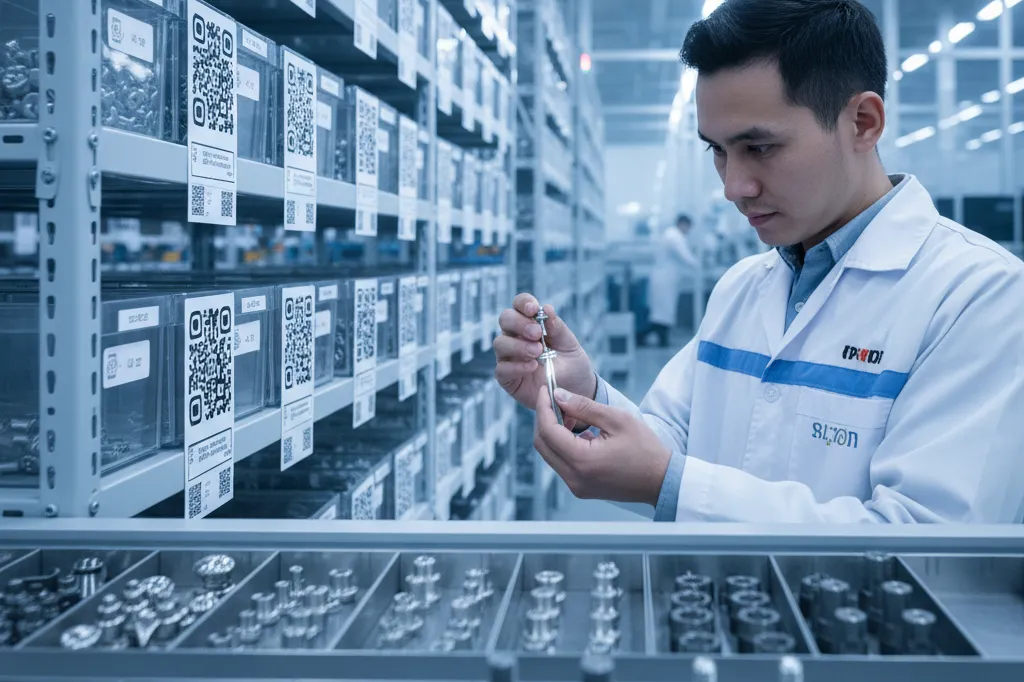
Vietnam is now garnering intense focus from the global manufacturing industry. Against a backdrop of stable economic growth, an abundant labor force, and a strategic location, it is transforming from just “the world’s factory” into a crucial production base for high-value-added products. As of July 2025, there are 433 industrial parks operating in the country, and their momentum is undeniable, with occupancy rates exceeding 90% in the southern region. Amid this boom, many Japanese manufacturing companies are expanding into Vietnam and proceeding to restructure their supply chains.
However, behind this rapid development, procurement and purchasing departments are facing new challenges. Chief among them is the procurement of “screws (fasteners),” which form the foundation of all products. How can companies clear the trilemma of ensuring a stable supply to prevent production line stoppages, securing quality equivalent to Japanese standards, and optimizing costs—all in a foreign land? This article will provide a detailed explanation of the specific “Five Keys” to achieving successful screw procurement in Vietnam, based on the latest market data and on-the-ground practical knowledge. From the realities of quality control to the latest inventory management methods utilizing DX, here are the hints to accelerate your company’s business in Vietnam.
The era of Vietnam being merely a low-cost production base is coming to an end. Government-led industrial upgrading policies and vigorous Foreign Direct Investment (FDI) are qualitatively changing Vietnam’s manufacturing industry.
The strength of Vietnam’s economy is also reflected in concrete figures. In 2023, retail and service sales showed steady growth, increasing by 9.6% year-on-year. Major cities like Ho Chi Minh City (9.6% growth) and the capital Hanoi (10.4% growth) are driving this economic expansion.
The manufacturing industry supports this growth. For example, the food processing industry alone is expected to grow by 7.4% year-on-year in 2024, with a market size projected to reach $79.3 billion, bustling with approximately 11,000 companies. The recipients of this active industrial activity are the industrial parks spreading across the country. As of 2025, 433 parks are operational. In the southern region, where many Japanese companies are concentrated, a high occupancy rate of over 90% is maintained. The occupancy rate in the north also exceeds 83%, and in some areas like Bac Ninh province, rental prices surged by 10% in 2024, indicating high demand.
Investment in Vietnam is no longer solely for the purpose of low labor costs. Looking at items imported from Japan to Vietnam in the first quarter of 2025, the largest share belongs to “computers and electronic components,” totaling $1.99 billion, or 34% of the total. Even more noteworthy is “machinery, tools, and parts,” which showed astonishing growth of 30.8% year-on-year, reaching about $1.2 billion in the January-March 2025 period.
This is clear evidence that more advanced production activities, such as the assembly of electronic devices and the manufacturing of precision machinery, are becoming more active within Vietnam. Statistics from 2021 also show that of the $22.9 billion in imports from Japan, machinery and transportation equipment accounted for $8.4 billion (36.7%), and this trend is accelerating.
As the manufacturing industry becomes more advanced and complex, the requirements for the parts used, especially screws and fasteners, also become stricter. The demand is no longer just for “cheaply, in large quantities,” but has shifted to supplying “high-precision special-order items, in the exact quantity needed, just-in-time.”
In the shadow of brilliant economic growth, procurement managers on the ground are facing concrete challenges. The following three walls stand in the way, especially when trying to implement Japanese-standard manufacturing locally.
Within Vietnam’s manufacturing industry, obtaining certifications for international standards like ISO 9001 (quality management) and ISO 14001 (environmental management) is widespread. This is a positive sign that the quality consciousness of local suppliers is improving.
However, the difficult reality is that “ISO certification does not equal Japanese-standard quality.” Gaps may still exist between the dimensional tolerances, mechanical properties, and surface treatment standards defined by Japan’s JIS (Japanese Industrial Standards) and Vietnam’s local standards (TCVN), or the internal standards that suppliers operate by.
Especially for critical components like screws, even if a drawing specifies compliance with “JIS B 1180 (Hexagon Bolts),” there is a non-zero risk that the local supplier will not correctly understand the intent and will deliver a substitute product that looks similar but differs in material or strength. This becomes a spark for defects in the assembly process or, in the worst case, a product recall.
Modern manufacturing is being forced to shift to “High-Mix Low-Volume (HMLV) production” to meet diversifying customer needs. Production bases in Vietnam are no exception. However, this production method creates unique challenges for parts procurement.
When the types of screws handled explode from tens to hundreds or even thousands of SKUs (Stock Keeping Units), conventional inventory management using Excel or visual checks instantly breaks down.
Although the unit price of screws is low, the number of items becomes enormous, and this inventory management inefficiency significantly degrades the entire factory’s productivity.
Southern Vietnam, accounting for 40% of the GDP and 42% of FDI, is an economic hub, but for that very reason, competition is intensifying. It is not easy to find reliable local suppliers and build stable business relationships.
Cases are seen where lead times become unstable or quality varies from lot to lot, especially when ordering small-lot special-order items or screws of special materials. There is also the problem of increased workload on the procurement department due. to the time it takes to obtain quotes and negotiate prices.
Switching to imports from Japan is an option, but this inevitably leads to longer lead times and increased transportation costs, creating the dilemma of offsetting the cost advantages gained by expanding into Vietnam.
The first key to overcoming these challenges and succeeding in procurement in Vietnam is to build a system that “embeds” Japanese-standard quality locally.
Checking for ISO 9001 certification when selecting suppliers is a minimum step. However, what is more important is the actual operation of that system. If possible, one should conduct on-site audits (factory audits) to confirm that traceability (the ability to track production history) is secured and that inspection equipment is properly calibrated.
Furthermore, strengthening the company’s own “incoming inspection” system is essential. It is necessary to introduce not only dimensional measuring tools (calipers, micrometers), screw gauges, and torque wrenches, but also, as needed, material analyzers (X-ray fluorescence analyzers, etc.) and hardness testers. Constructing a “double-check” system that does not rely on the supplier’s quality assurance becomes the last line of defense against the outflow of defective products.
Even for JIS standard parts, it is recommended to clearly state the material, strength classification, surface treatment, and tolerances on the drawings, and if possible, to include Vietnamese or English translations. Vague instructions lead to “guesswork” interpretations locally and cause quality defects.
It is also important to hold regular quality meetings with suppliers to share the “technical background”—why that dimensional tolerance is necessary, why that specific surface treatment must be used—and to provide continuous education to raise quality awareness.
After securing quality, it is necessary to optimize cost and lead time. The key to this is “selective application” and “comprehensive management.”
It is not always optimal to procure (localize) all screws within Vietnam. A strategic balance, such as the following, is required.
The important thing is not to make this decision in-house alone, but to collaborate with a partner (a trading company or coordinator) who is well-versed in both the Vietnamese market and the Japanese parts situation. By leveraging their network, you can develop high-quality processing suppliers within Vietnam or open up optimal import routes from Japan.
Streamlining screw procurement is insufficient if only “direct materials” used on the production line are addressed. MRO (Maintenance, Repair, and Operations) materials, which are essential for factory maintenance, repair, and operation, are also a major procurement challenge. MRO includes a wide range of items such as tools, safety equipment, measuring instruments, and chemical products.
The MRO market in the Asia-Pacific region is expected to grow rapidly from $501.17 billion in 2024 to $809.04 billion by 2032, at a CAGR of 6.50%. In this growing market, procuring production screws and MRO materials from separate suppliers complicates ordering tasks and prevents cost optimization.
By selecting a partner who can supply both screws (fasteners) and MRO materials as a one-stop service, you can unify the procurement contact point, expecting significant efficiency gains in purchasing operations and cost reductions through volume discounts.
To eradicate the challenges of HMLV production, it is essential to break away from conventional inventory management that relies on intuition and experience, and to implement a data-driven digital transformation (DX).
The first thing to do is “visualization.” Grasp how far your company’s screw inventory deviates from recommended KPIs (Key Performance Indicators).
For example, as a benchmark recommended by Ohta Vietnam based on its client companies (median of 20 companies, 2024 results), the ideal inventory turnover rate (annual outbound quantity ÷ average inventory quantity) is 6 to 12 times per year. If this rate is 3 times or less, it is a clear sign of excess inventory.
Furthermore, a stockout rate (number of stockout lines ÷ number of order lines) of less than 1% is recommended as a global standard. By monitoring these KPIs weekly or monthly, inventory levels can be improved based on objective data.
It is inefficient to manage all several thousand screw inventory items at the same level. This is where “ABC analysis” is effective. Based on annual consumption value, inventory is classified into the following three ranks.
By prioritizing inventory in this way, management resources can be optimally allocated.
Utilizing the Internet of Things (IoT) and automation technologies takes data management (DX) a step further and dramatically improves on-site work efficiency.
If screw receiving and shipping management is done with handwritten slips or Excel input, human errors and time lags occur, and the reliability of inventory data is lost.
By introducing an inventory management system using handheld terminals and QR codes (or barcodes), inventory data is instantly reflected in the cloud system at the same time as the on-site receiving/shipping work. This eliminates discrepancies (inventory discrepancies) between the “physical inventory” on-site and the “system inventory.” Even on sites handling a high mix of screws, picking errors and location management confusion are prevented, and the man-hours required for inventory counting are significantly reduced.
For particularly critical screws, such as the A-Rank items mentioned earlier, introducing an automated ordering system utilizing IoT is effective. When the inventory falls below a preset “reorder point,” the system automatically sends an order data to the supplier.
This makes it possible to reduce the risk of stockouts due to human oversight or failure to place an order to almost zero. A mechanism that “automatically replenishes just the necessary amount at just the necessary time” frees procurement managers from the anxiety of line stoppages.
Attempting to realize all four of these keys (Quality, Cost/Lead Time, DX, IoT) entirely in-house requires enormous resources and time. The final and most important key to succeeding in screw procurement in Vietnam is to select a “true partner” who can provide comprehensive support for all of them.
“I only want 100 of this screw.” “I need 5 pieces custom-machined from a special material for a prototype.” The ability to flexibly respond to these detailed and difficult demands, which are characteristic of HMLV production, is a crucial criterion for partner selection.
What is required is not just a “parts store,” but the capability of a “solution provider” who has in-house manufacturing functions (precision machining) or who can utilize an extensive network of partner companies to procure small-lot special-order items.
Communication barriers, such as “the nuance of the drawing specifications isn’t getting across” or “root cause analysis of quality problems doesn’t proceed smoothly,” are fatal for the manufacturing industry.
Especially for parts like screws, where technical coordination is essential, the existence of a partner who can conduct technical conversations in Japanese and understands the “tacit knowledge” and quality culture of Japanese manufacturing is indispensable. They function as a “technical interpreter” between the company and local suppliers, and as the “final bastion” to guarantee quality.
With the rapid advancement of Vietnam’s manufacturing industry, screw procurement has changed from a strategic challenge of “buying cheaply” to “how to stabilize and optimize.” The challenges of inconsistent quality standards, complex inventory management due to HMLV production, and managing local suppliers cannot be solved by conventional methods.
The keys to success are: ① establishing a clear quality assurance system, ② a cost and lead time strategy that balances local and imported goods, ③ data-driven inventory management (DX) based on KPIs, ④ automation of on-site work using IoT, and, supporting all of these, ⑤ finding a true procurement partner with whom you can have technical dialogue in Japanese.
Ohta Vietnam has established a one-stop system to respond to these challenges faced by Japanese manufacturing companies in Vietnam, fusing in-house precision machining manufacturing capabilities, a trading company function that covers even MRO materials, and inventory management solutions utilizing IoT. For any concerns regarding screw procurement in Vietnam, please consult us, the “procurement professionals.” We will strongly support the optimization of your supply chain.
For inquiries regarding samples or materials, please respond to this email or contact our sales representative!
At Ohta Vietnam, we not only provide ready-made products such as screws and bolts, but also support activities in the manufacturing field such as cutting, inspection, assembly, packaging…
Our equipment list is here
As a “specialized support” for the manufacturing industry in Asia. If you have any related questions, feel free to contact Ohta Vietnam for detailed support!
URL: https://ohtavn.com/en/contact/