Column
media

media
column
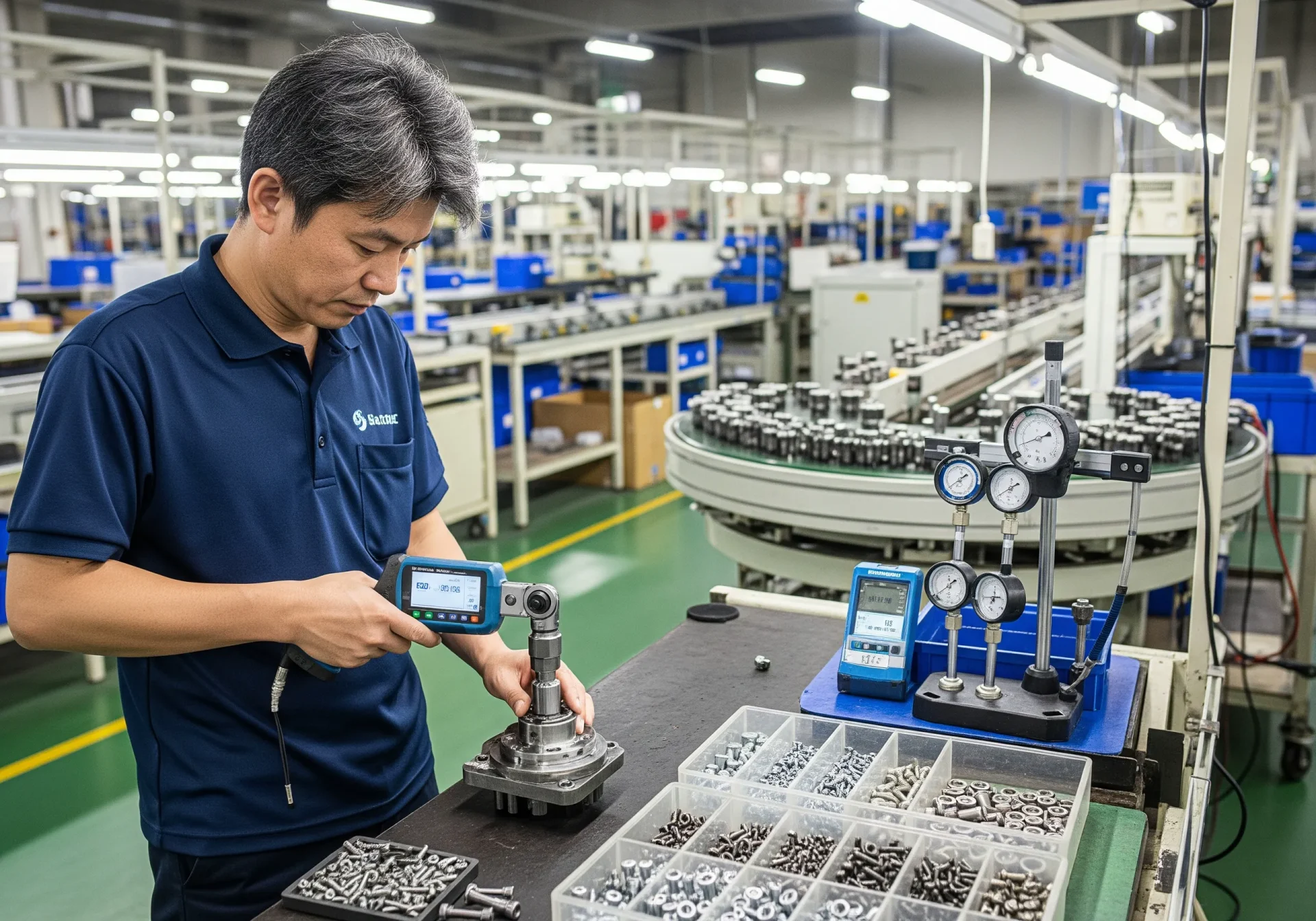
In manufacturing sites across Asia, including Vietnam, there is a simultaneous demand for ensuring the corrosion resistance of screws and fastening parts, stabilizing torque, and complying with RoHS/REACH regulations. Rust caused by salt damage or chemical cleaning, and variations in friction coefficients during mass production, can lead to defects and reduced product lifespan. This article compares the latest surface treatment technologies—such as the steam process, zinc-flake coating systems, Zn-Ni plating, electro-galvanizing/hot-dip galvanizing, passivation, and trivalent chromium systems. It also presents selection criteria based on environment and application, along with key points for launching mass production.
Surface treatment is a critical process that provides screws and fastening parts with rust prevention, wear resistance, functionality, and aesthetic appeal. The required performance varies greatly depending on the operating environment. Key degradation factors include salt damage in coastal areas, chemical corrosion in chemical plants, UV rays and humidity in long-term outdoor use, and oxidation in high-temperature environments. Selecting the appropriate treatment mitigates these risks, enhancing lifespan and reliability.
Furthermore, the tightening torque T is expressed as T ≈ K·F·d, where the stabilization of the friction coefficient dictates the reproducibility of the axial force. Unstable friction increases the risk of improper fastening or damage from over-tightening. Therefore, managing not only the type of treatment but also its friction characteristics is essential.
From a standards and regulatory perspective, surface treatment specifications by JIS and ISO, corrosion resistance evaluation tests (e.g., ISO 9227), and environmental regulations like the RoHS Directive and REACH regulations serve as the basis for selection and procurement. Designing specifications based on these factors is directly linked to ensuring legal compliance and competitiveness in the global market.
Sources: ISO 4042:2022, ISO 10683:2018, ISO 9227:2017, RoHS Directive 2011/65/EU (Consolidated version 2025-01-01), REACH Regulation (EC) No 1907/2006
This is a new technology that forms a boehmite film on the surface of aluminum alloys by reacting it with water vapor. The film thickness is approximately 3µm, and it demonstrates corrosion resistance comparable to anodizing, even on ADC12 and A7xxx series alloys. The equipment can handle rotary conveyance or bulk processing, and quality control is possible through non-destructive film thickness measurement. As it uses no chemical solutions and has a low wastewater load, it is also suitable for RoHS/REACH compliance. However, design considerations are necessary to prevent uneven reactions on complex shapes or in sealed parts.
This water-based coating is free of hexavalent chromium and demonstrates corrosion resistance of over 2000 hours in salt spray tests. Its thin film has minimal impact on dimensions, and there is a low risk of hydrogen embrittlement, making it applicable to high-strength screws. It is widely used in outdoor structures and salt-damage-prone regions.
By adding approximately 15% Ni to Zn, this plating improves corrosion, heat, and wear resistance. It is resistant to harsh environments and chemical atmospheres, and is used in vehicles, building materials, and industrial machinery. Although the cost is slightly higher, mass production supply is available in Vietnam.
Electro-galvanizing with a trivalent chromium finish is inexpensive and has a good appearance, making it suitable for standard rust prevention. Hot-dip galvanizing provides a thick film for heavy-duty corrosion protection and offers sacrificial protection even when scratched, but it is not suitable for precision parts requiring high dimensional accuracy.
This treatment enhances the corrosion resistance of stainless steel surfaces by forming an ultra-thin oxide film. By applying wax, it’s also possible to add lubricity and anti-galling effects, making it effective for food processing equipment and marine machinery.
These are surface treatments that comply with environmental regulations, such as trivalent Unichrome and trivalent chromate. They are widely adopted for export products where RoHS/REACH compliance is mandatory.
Tightening torque is highly dependent on the friction coefficient. In mass production, stabilizing the friction on the bearing surface and threads is crucial. By monitoring coefficient trends with data-logging torque wrenches or IoT measurements, abnormalities can be detected early.
Sources: ISO 4042:2022, ISO 10683:2018
Surface treatments are stratified according to the operating environment and required specifications. Geomet or Zn-Ni is effective for coastal or chemical atmospheres, while the steam process is suitable for lightweight components. Prioritize needs such as torque stability, minimal dimensional impact, and heavy-duty corrosion protection. Also, ensure the acquisition of evidence for RoHS/REACH compliance and trivalent system specifications.
Ensure adhesion through pre-treatment (degreasing, blasting, etc.) and stabilize film thickness, baking, and conveyance conditions. Inspections should combine non-destructive film thickness measurement with visual and adhesion tests. Verify reliability through SST, wet-cycle tests, and repeated screw-in tests. Standardize documentation, including work procedures, inspection standards, and lot control sheets.
Sourcing in Vietnam offers advantages in terms of cost and lead time and can accommodate high-mix, low-volume production. Supplier audits should confirm equipment capacity, wastewater treatment, trivalent/hex-free実績, and lot-to-lot reproducibility, while optimizing inventory and MOQ design.
Collect and visualize torque data, film thickness, and SST data, and monitor trends with SPC. Improve traceability through dashboards and expedite corrective actions by setting alert thresholds.
Ohta shortlists candidate treatments based on application and environment and designs evaluation plans. For procurement in Vietnam, we select suppliers with a proven track record in mass production and provide support for quality audits, including condition optimization and non-destructive film thickness management. We also continuously follow business trends for new technologies like the steam process.
Sources: ISO 9227:2017, ISO 4042:2022, ISO 10683:2018
This article compared the latest surface treatment technologies, such as the steam process, Geomet, and Zn-Ni plating, and explained the importance of optimal selection based on environment and application, as well as inspection and standardization. Stratifying by environment (coastal, chemical, high-temperature) and designing for friction stabilization will dramatically improve durability and quality.
As a practical proposal, we recommend optimizing treatment conditions through small-scale DOE, fixing pre-treatment, baking, and conveyance conditions, and obtaining evidence of RoHS/REACH compliance and trivalent chromium use.
Please feel free to contact Ohta to discuss evaluation testing and the possibility of application in your Vietnamese procurement.
For inquiries regarding samples or materials, please respond to this email or contact our sales representative!

At Ohta Vietnam, we not only provide ready-made products such as screws and bolts, but also support activities in the manufacturing field such as cutting, inspection, assembly, packaging…
Our equipment list is here
As a “specialized support” for the manufacturing industry in Asia. If you have any related questions, feel free to contact Ohta Vietnam for detailed support!
URL: https://ohtavn.com/en/contact/