Column
media

media
column
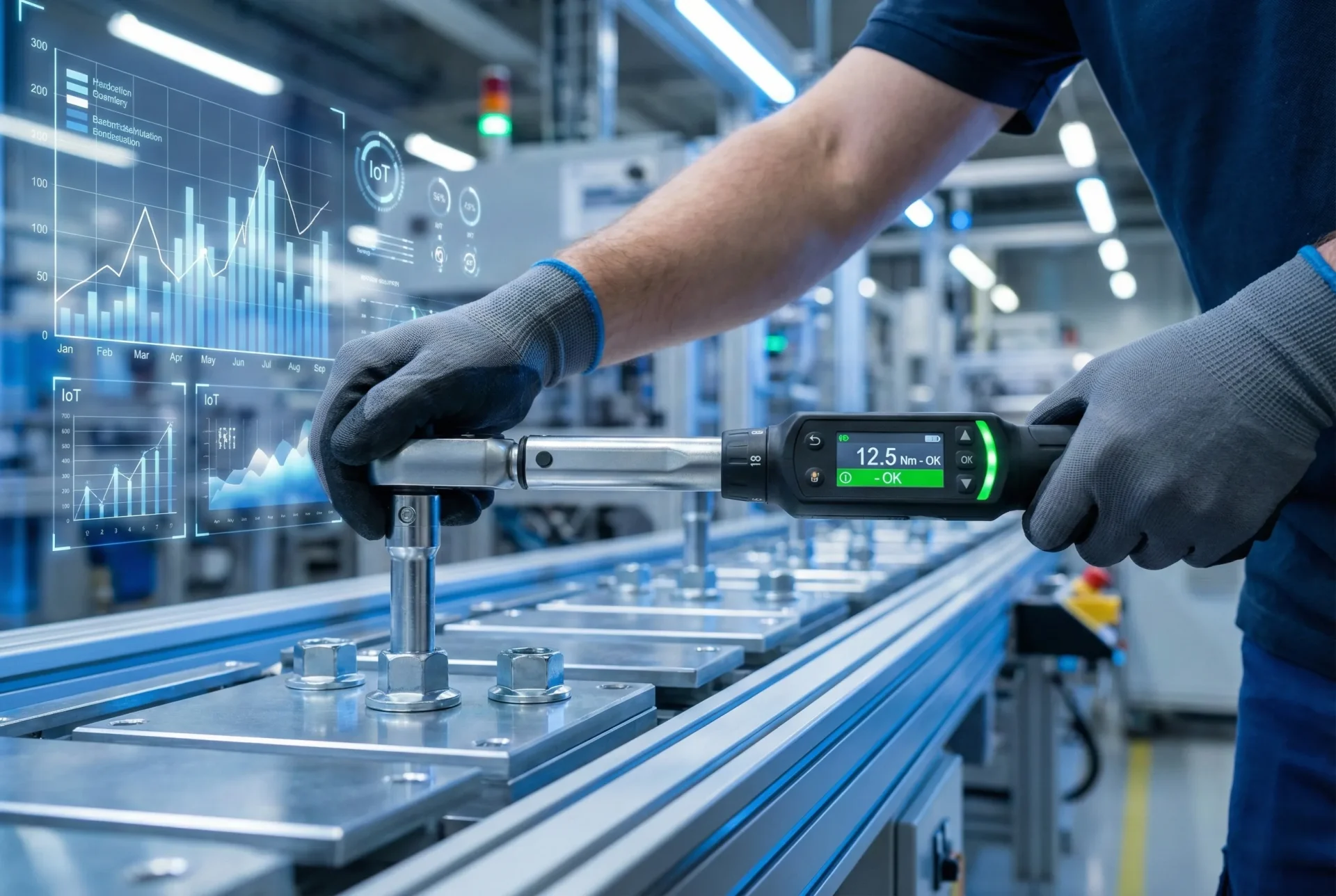
In the manufacturing industry, the risk of a single “screw loosening” causing a serious accident or recall is one of the issues that top management and site managers should be most vigilant about. In fact, according to a cause investigation of screw fastening-related troubles (1977 domestic survey in Japan), tightening defects account for about 43% and loosening accounts for about 20%, and it is considered highly probable that these can be prevented with appropriate knowledge and management.
Especially in overseas production bases like Vietnam, environmental factors different from Japan (temperature, humidity, vibration) and quality variations in procured parts amplify the risk of loosening. Overconfidence that “it’s fine because I tightened it with the usual torque” can lead to unexpected line stoppages and increased costs.
In this article, for technical staff and procurement managers at manufacturing sites, we will explain “5 loosening countermeasures” that can be implemented immediately, while scientifically unraveling the mechanism of screw loosening. Furthermore, we will touch upon stable procurement in Vietnam and the latest axial force management utilizing IoT, presenting concrete action plans to protect factory safety and productivity.
Screw loosening is broadly classified into “loosening accompanied by rotation” and “loosening not accompanied by rotation.” What is frequently overlooked on site is “initial loosening (initial settling),” which is not accompanied by rotation.
Immediately after tightening a screw, minute irregularities on the bearing surface of the bolt, the screw threads, and the contact surface of the clamped material are crushed and smoothed by the external load. As a result, the contact surface sinks at a micro level (plastic deformation), and the bolt tension (axial force) decreases. Generally, it is said that the axial force immediately after tightening decreases by several percent to about 10% within a few hours to a few days, and design and retightening considering this are necessary.
More serious is “return rotation” caused by vibration or impact. When the frictional force acting between the bolt and nut is momentarily lost due to lateral cyclic loading (such as Junker vibration), the screw begins to rotate in the loosening direction naturally along its own lead angle. Once rotation begins, the axial force rapidly approaches zero, leading to falling off or breakage in the worst case.
From here, we will introduce 5 specific countermeasures to consider at manufacturing sites from the viewpoints of cost, workability, and reliability.
The basic and ultimate secret of loosening countermeasures is to apply appropriate “axial force (preload).”
“Structural locking” that does not rely on friction has extremely high reliability.
Conventional spring washers may be limited to auxiliary effects, but high-function washers demonstrate effects on a different dimension.
By filling the gaps in the screw, physical fixation and a sealing effect (rust prevention) can be obtained simultaneously.
Screws are also evolving with the progress of Industry 4.0.
When procuring these countermeasure parts within Vietnam, the biggest challenges are “authenticity of quality” and “material certification.” There is a risk that low-quality copy products that only mimic the appearance are circulating in the market.
Screw loosening is an inevitable phenomenon based on physical laws, but it can be turned into a “controllable risk” through appropriate technology and management.
It is essential to use these 5 countermeasures properly according to cost and importance.
If you are unsure which countermeasure is best for your manufacturing site in Vietnam, or if you need to procure reliable fastening parts, please consult Ohta Vietnam. We provide total support from part selection that meets Japanese quality standards to solving on-site issues. Why not start by inspecting the “fastening part with the most trouble” currently in use?
For inquiries regarding samples or materials, please respond to this email or contact our sales representative!
At Ohta Vietnam, we not only provide ready-made products such as screws and bolts, but also support activities in the manufacturing field such as cutting, inspection, assembly, packaging…
Our equipment list is here
As a “specialized support” for the manufacturing industry in Asia. If you have any related questions, feel free to contact Ohta Vietnam for detailed support!
URL: https://ohtavn.com/en/contact/