Column
media

media
column
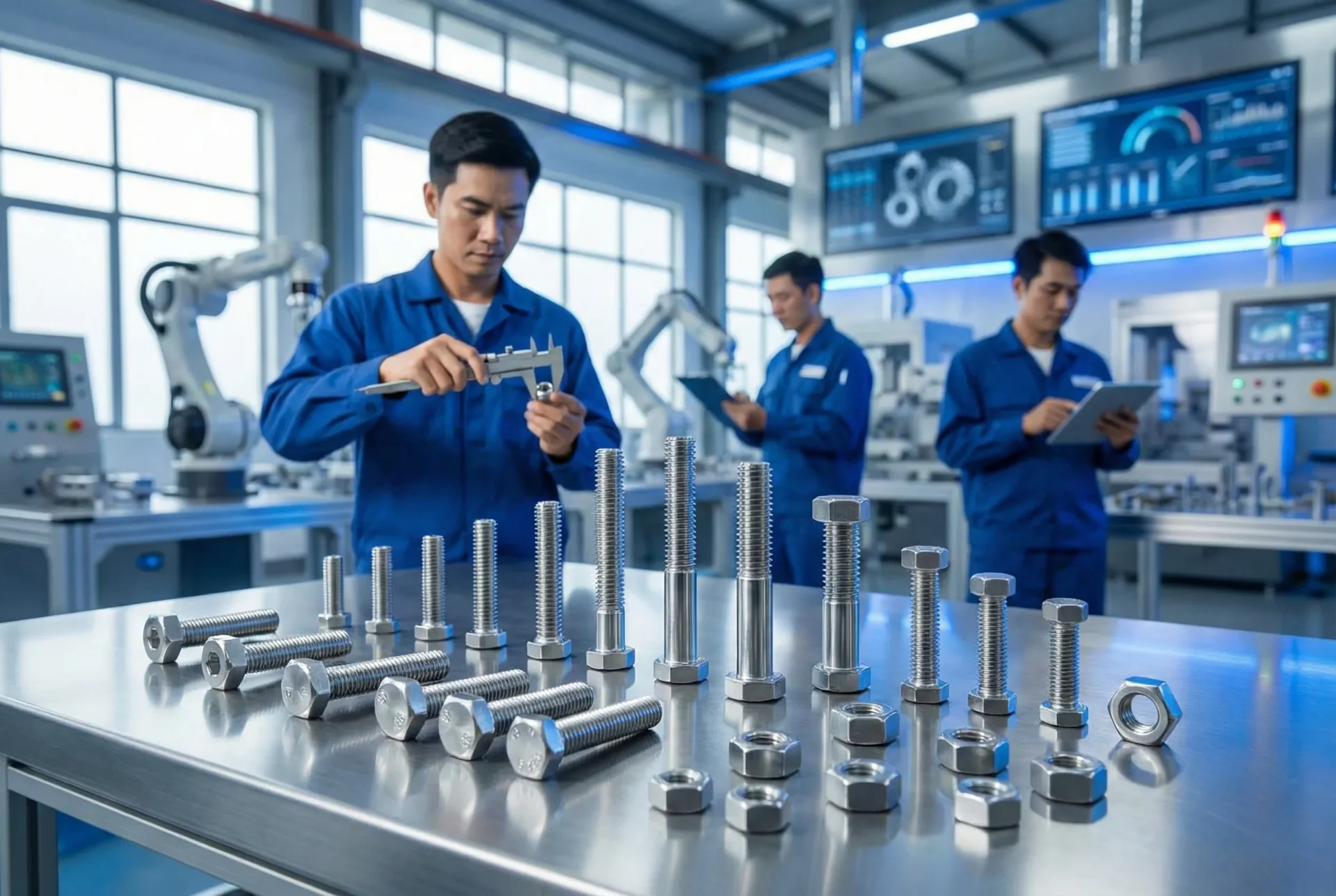
“It is stainless steel, so it should not rust”—in manufacturing sites, this misconception ceaselessly invites unexpected troubles and increased costs. Certainly, Stainless Steel possesses excellent corrosion resistance, but in high-temperature, high-humidity environments like Vietnam, or under improper maintenance, corrosion and “galling” occur, directly linking to serious risks such as production line stoppages and product recalls. Particularly in the Vietnam market, where precision equipment and automotive parts manufacturing are accumulated, the reliability of fastening parts is a lifeline that determines the brand value of the final product.
In this article, based on the specialized knowledge of fastening parts that Ohta Vietnam has cultivated over many years, we will scientifically reaffirm the characteristics of stainless steel screws and explain correct maintenance methods and secrets for extending service life that can be immediately practiced on-site. We present a concrete roadmap to realize significant reductions in procurement costs and downtime by reducing part replacement frequency through appropriate management. This series of knowledge should become a beneficial asset for all manufacturing industry stakeholders, from management layers to on-site technical personnel.
First, let us share the technical basics. The reason stainless steel is hard to rust is that the contained chromium (Cr) bonds with oxygen to form a dense protective film called a “Passive Film” on the surface. The thickness of this film is merely 1 to 3 nanometers (1 nanometer is one-millionth of a millimeter), which is extremely thin, but it possesses a self-repairing function.
However, this self-repairing function is not all-powerful. Even with SUS304 (18Cr-8Ni) defined by standards such as JIS G 4303, if iron powder adheres to the surface (“contact rust”) or in the presence of chloride ions (seawater or salty breeze), the film is destroyed, regeneration cannot keep up, and corrosion progresses. In particular, chlorine ions locally destroy the passive film and become the main cause of deep hole-like rust called Pitting Corrosion.
Vietnam’s average humidity exceeds approximately 80% throughout the year, and can reach nearly 90% during the rainy season. This high humidity makes it easy for a moisture film to form on metal surfaces, promoting electrochemical corrosion reactions. Furthermore, accompanying rapid industrialization, the atmosphere in factory zones may contain sulfur oxides (SOx) and nitrogen oxides (NOx); these react with moisture to create an acidic environment, becoming factors that accelerate the corrosion of stainless steel screws.
Even stainless steel screws that can be expected to have a durability of over 30 years in normal indoor environments may develop red rust in just a few months if maintenance is neglected under such environmental conditions. Therefore, rather than applying domestic Japanese standards as they are, the formulation of management standards adapted to the Vietnamese environment is indispensable.
Along with rust, a frequent trouble with stainless steel screws is “galling” (seizing). This is a phenomenon where the screw threads expand due to frictional heat during tightening, and the metal contact surfaces weld together. Once galling occurs, it becomes impossible to remove or tighten the screw, and the bolt must be cut to be removed, resulting in massive man-hours for recovery.
Stainless steel has the characteristics of low thermal conductivity (about one-third of carbon steel) and a large coefficient of thermal expansion (about 17.3×10⁻⁶/K for SUS304, approx. 11.7×10⁻⁶/K for carbon steel). In other words, frictional heat does not escape easily, and it expands easily with heat, so galling easily occurs if rapid tightening is performed.
The best measures to prevent galling are appropriate torque management and lubrication.
The most basic and effective maintenance to extend the life of stainless steel screws is “cleaning.” Simply by regularly washing off dust, salt content, iron powder, etc., adhering to the surface with water and drying it, the soundness of the passive film can be maintained.
Also, to prevent dissimilar metal contact corrosion (galvanic corrosion), if the base material using the stainless steel screw is aluminum or galvanized steel sheet, it is recommended to sandwich an insulating washer (made of rubber or resin). By blocking the corrosion current caused by the potential difference, it is possible to extend the life of the screw several times over.
Depending on the usage environment, standard SUS304 may lack sufficient corrosion resistance. Especially in coastal regions of Vietnam or near chemical plants, please consider changing to SUS316, which has 2.0 to 3.0% molybdenum (Mo) added. SUS316 has significantly higher corrosion resistance against chloride ions compared to SUS304; although the initial cost rises by about 20 to 30%, in most cases, it becomes advantageous in terms of Total Cost of Ownership (TCO) due to reduced maintenance frequency and longer replacement cycles.
Furthermore, if high strength is required, consider SUS630 (precipitation hardening type), etc., but since these require special heat treatment, we recommend consulting a specialized trading company like Ohta Vietnam.
At Ohta Vietnam, we do not simply sell screws, but provide optimal “fastening solutions” tailored to the customer’s manufacturing environment.
Maintenance and service life extension of stainless steel screws are not merely “parts management,” but management issues that sway the stable operation and cost competitiveness of the entire manufacturing line.
By taking these measures, you can minimize sudden line stoppage risks and reduce long-term equipment maintenance costs. If you are currently troubled by screw rust, galling, or procurement quality, please by all means consult Ohta Vietnam. From diagnosing the site environment to selecting the optimal fastening parts, we strongly support the improvement of your company’s productivity.
For inquiries regarding samples or materials, please respond to this email or contact our sales representative!
At Ohta Vietnam, we not only provide ready-made products such as screws and bolts, but also support activities in the manufacturing field such as cutting, inspection, assembly, packaging…
Our equipment list is here
As a “specialized support” for the manufacturing industry in Asia. If you have any related questions, feel free to contact Ohta Vietnam for detailed support!
URL: https://ohtavn.com/en/contact/