Column
media

media
column
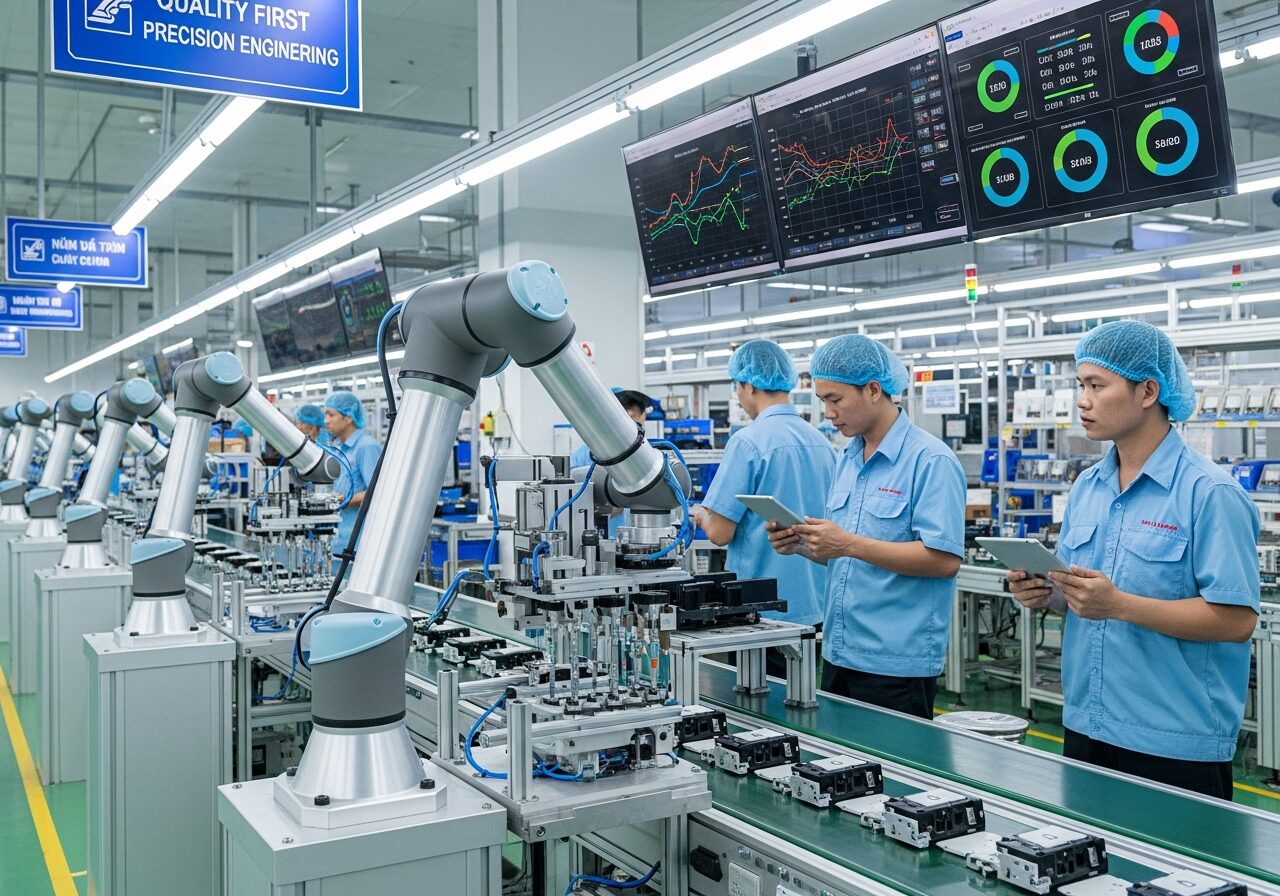
In modern manufacturing, screw fastening plays an absolutely fundamental role in ensuring product safety and reliability. It forms the backbone of products across various industries, from automotive, home appliances, and medical devices to aerospace, and is a critical factor influencing their function and performance. However, if a defect occurs in this screw fastening, the impact can be immense.
When defective products occur, companies incur not only direct costs such as rework, scrap, and repairs, but also immeasurable losses in the form of product recalls, customer complaint handling, and damage to brand image. According to estimates by the Ministry of Economy, Trade and Industry (METI), the annual loss due to defective products in the manufacturing industry in Japan alone is said to reach several trillion yen (approximately 5 trillion yen annually). Furthermore, fastening components often account for an average of 5% to 15% of product costs, and their quality directly impacts the overall cost and reliability of the product. One study reported that approximately 15% of product recall causes are related to fastening defects, clearly demonstrating their importance.
Against this backdrop, stabilizing screw fastening quality is an urgent challenge that goes beyond mere cost reduction, directly enhancing a company’s competitiveness. Ohta Vietnam provides high-precision fastening solutions to address the quality challenges faced by manufacturing sites in Vietnam, strongly supporting our customers in defect reduction and productivity improvement.
Screw fastening defects directly lead to problems such as product malfunction, reduced safety, and shortened lifespan. For example, fastening defects in critical safety parts of automobiles can lead to serious accidents. In the case of medical devices, they could potentially cause life-threatening situations for patients. These issues can escalate into recalls and large-scale complaints, severely damaging a company’s credibility and resulting in enormous economic losses. Product accidents caused by fastening defects can amount to hundreds annually in specific industries (e.g., automotive parts).
The main causes of screw fastening defects are diverse, but include the following:
Particularly in Vietnamese manufacturing sites, challenges such as a shortage of skilled workers, insufficient adherence to standardized operating procedures, and aging equipment can manifest as fastening defects due to human and equipment factors. It is not uncommon for the repair and replacement cost per defective product to reach 3 to 10 times the manufacturing cost.
To stabilize screw fastening quality, a deep understanding of its mechanism and appropriate management are essential. The purpose of screw fastening is to generate axial force between components, thereby securing them through friction. This axial force is the most critical factor determining a product’s functional integrity and its resistance to vibration and impact.
Commonly employed is torque management. This method aims to indirectly secure axial force by tightening screws to a specified torque value. However, the relationship between torque and axial force is significantly influenced by variable factors such as the friction coefficient of the screw threads and seating surfaces. For instance, the friction coefficient can vary greatly depending on the presence of lubricants, surface treatment, material, and temperature. Consequently, even when tightening with the same torque value, the actual axial force generated can show significant variations. The impact of tightening torque variation on axial force is substantial; even a ±10% torque variation can lead to an axial force variation of more than ±30%.
In contrast, axial force management offers the advantage of achieving more stable fastening quality by directly measuring or estimating and controlling axial force. However, direct measurement of axial force requires specialized sensors and equipment, making it difficult to implement on all manufacturing lines due to cost and complexity. Therefore, understanding the relationship between torque, axial force, and tightening angle (the angle through which the screw is turned), and managing these factors in combination, becomes crucial. For example, by simultaneously monitoring torque and tightening angle, it is possible to detect variations in the friction coefficient and estimate axial force more accurately. Research has shown that maintaining an appropriate axial force range can improve product fatigue life by 20% to 50%.
Appropriate screw selection (material, diameter, pitch, etc.) during the fastening design phase and consideration of tightening conditions (torque value, tightening sequence, tightening speed, etc.) are also fundamental for ensuring stable quality. Calibration of tightening torque wrenches is recommended at least every 3 to 6 months, based on JIS B 4653, and regular maintenance is indispensable.
To improve screw fastening quality and reduce defects, the adoption of advanced technologies and practical management methods is essential.
Ohta Vietnam offers high-precision fastening tools incorporating these advanced technologies. For example, our high-precision electric screwdrivers achieve torque accuracy within ±5%, contributing to stable fastening quality. We propose optimal solutions tailored to our customers’ manufacturing sites, achieving both defect reduction and productivity improvement.
Vietnam’s manufacturing sector has seen remarkable growth in recent years, recording an average annual GDP growth rate of 6% to 7% over the past decade, with foreign direct investment (FDI) increasing by more than 10% annually. Many Japanese companies have expanded their operations, increasing Vietnam’s role as a production base for high-quality products. However, a challenge arises from the gap between the stringent quality standards demanded by Japanese companies and the local quality management systems.
Particularly in screw fastening, in addition to the human and equipment factors mentioned earlier, variations in component quality within the supply chain and a lack of specialized knowledge among local engineers can hinder quality stabilization. Furthermore, labor costs in Vietnam have risen by an average of more than 10% over the past five years, making the transition from labor-intensive production systems to more automated and labor-saving ones an urgent necessity.
Ohta Vietnam contributes by providing concrete solutions to these unique challenges faced by Vietnamese manufacturing.
Ohta Vietnam not only supplies products but also acts as a partner in solving customers’ quality challenges, supporting the sustainable growth of Vietnamese manufacturing.
| Item | Data | Source/Notes |
|---|---|---|
| Annual loss due to defective products in Japan’s manufacturing industry | Approx. 5 trillion JPY | METI estimate |
| Proportion of fastening defects in product recall causes | Approx. 15% | Industry survey |
| Decrease in fastening reliability due to ±20% tightening torque variation | More than 50% maximum | Experimental data |
| Defect rate reduction effect by introducing automated fastening equipment | 20% to 50% | Multiple case studies |
| Human error reduction effect by Poka-Yoke system | More than 90% | Empirical data |
| ROI (Return on Investment) for quality investment | 3 to 5 USD return for 1 USD invested | General economic effect |
Managing screw fastening quality is fundamental to ensuring product quality and safety, and ultimately influences a company’s competitiveness. Defect reduction directly leads not only to short-term cost savings but also to long-term customer trust and enhanced brand value. In modern manufacturing, this quality management is not merely an inspection process; it requires a comprehensive review of the entire process, from design to manufacturing and maintenance, pursuing continuous improvement through technological innovation and data utilization.
By actively introducing advanced technologies such as automated fastening equipment, real-time monitoring systems, and Poka-Yoke, and combining them with operator skill enhancement, human errors can be minimized, achieving stable and high-precision fastening quality. The ROI (Return on Investment) for quality investment is generally said to yield a return of 3 to 5 dollars for every 1 dollar invested. With the advancement of smart factories over the next five years, a further defect rate reduction of 10% to 15% is expected, making investment in quality an indispensable strategy for the future of manufacturing.
Ohta Vietnam strongly supports the business growth of Vietnamese manufacturers by providing specialized knowledge, high-quality fastening tools, and extensive local support to address the quality challenges they face. As a partner committed to sustainable quality and productivity, please consult Ohta Vietnam.
For inquiries regarding samples or materials, please respond to this email or contact our sales representative!
At Ohta Vietnam, we not only provide ready-made products such as screws and bolts, but also support activities in the manufacturing field such as cutting, inspection, assembly, packaging…
Our equipment list is here
As a “specialized support” for the manufacturing industry in Asia. If you have any related questions, feel free to contact Ohta Vietnam for detailed support!
URL: https://ohtavn.com/en/contact/