Vietnam vs. Japan Procurement Comparison: What is the Optimal Hybri...
Column
media
column
Vietnam vs. Japan Procurement Comparison: What is the Optimal Hybrid Strategy?
Introduction
The manufacturing landscape has become increasingly complex and uncertain, exacerbated by geopolitical risks, currency fluctuations, soaring raw material and labor costs, and recent supply chain disruptions due to pandemics and international conflicts. Ensuring stable supply and maintaining cost competitiveness are urgent priorities. As the risks of relying on a single source of procurement grow, the importance of a ‘hybrid procurement strategy’ has never been higher. This strategic approach aims to strengthen overall supply chain resilience, enable flexible responses to market fluctuations, and achieve sustainable business growth.
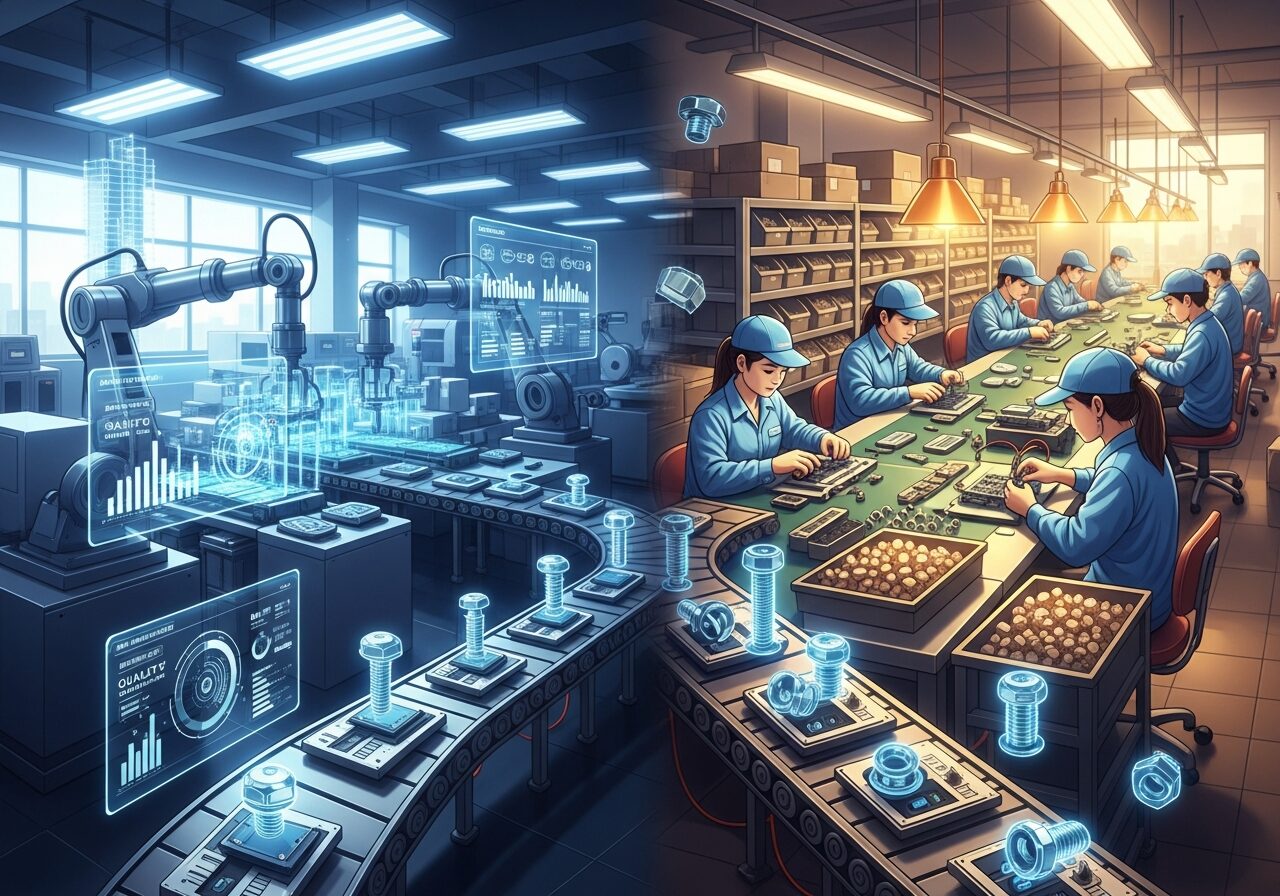
This article provides a comparative analysis of the procurement environments in Japan, known for its high quality and reliability, and Vietnam, recognized for its cost competitiveness and growth potential. We will delve into the types, benefits, challenges, and countermeasures for successful optimal hybrid strategies that leverage the strengths of both countries to support sustainable growth. We will provide practical explanations using the procurement of fastening components (such as bolts, nuts, and screws used to secure mechanical parts) as an example.
Ohta Vietnam leverages its extensive experience and network in Vietnam to strongly support our clients in optimizing their supply chains. We hope this article will assist you in re-evaluating your procurement strategies.
Current State of Procurement Environments in Japan and Vietnam
Understanding the characteristics of each country’s procurement environment is essential for an optimal hybrid strategy.
Japan’s Procurement Environment
Japan’s manufacturing industry boasts world-class quality and reliability. Its precision machining technology enables the production of components requiring micron-level accuracy across diverse sectors, including automotive parts, medical devices, and aerospace. A skilled workforce, with advanced techniques and quality consciousness cultivated through years of experience and On-the-Job Training (OJT), supports stable production.
Advantages:
High Quality and Reliability: Strict quality standards compliant with JIS (Japanese Industrial Standards) and advanced technical capabilities.
Precision Machining Technology: Manufacturing of components requiring micron-level accuracy.
Skilled Workforce: Stable production supported by experienced technicians.
Quick Lead Time Capability: Rapid development and production through collaboration with domestic suppliers.
Strong Supplier Relationships: Trust and technical cooperation fostered through long-term partnerships.
Disadvantages:
High Labor Costs: The average monthly wage in manufacturing is around 300,000 JPY (as of 2023), which is high. Total labor costs further increase when social security and benefits are included.
Soaring Raw Material Costs: Highly susceptible to international market price fluctuations, and also vulnerable to the impact of a weaker yen due to reliance on imported raw materials.
Labor Shortage: The decline in skilled workers due to the aging population and low birthrate is severe, making the securing and succession of technical expertise an urgent challenge.
For fastening components, strengths include strict quality control compliant with JIS standards and the ability to handle special materials and shapes, but costs tend to be higher.
Vietnam’s Procurement Environment
Vietnam is rapidly emerging as a manufacturing hub in ASEAN (Association of Southeast Asian Nations). Government incentive policies and a young, abundant workforce are driving its growth. With a working-age population of approximately 68 million (2022) and an average age in the early 30s, its workforce is notably young.
Advantages:
Cost Competitiveness: Minimum wage in Region I is low at 4.68 million VND per month (approx. 20,000 JPY, as of July 2022), and land costs are also inexpensive, roughly 1/15 to 1/10 of Japan’s level.
Young Workforce: Abundant working-age population of approximately 68 million (2022) with a young average age.
Government Incentives for Manufacturing: Comprehensive tax incentives for foreign-invested enterprises (e.g., corporate income tax exemption periods) and preferential land use fees.
Leveraging FTAs (Free Trade Agreements): Vietnam has signed numerous FTAs, including CPTPP, EVFTA, and RCEP, allowing businesses to enjoy tariff benefits and enhance export competitiveness.
Economic Growth: Strong growth with GDP growth rates of 8.02% in 2022 and 5.05% in 2023. Domestic market expansion is also anticipated.
Advancing Infrastructure Development: Logistics infrastructure is improving with the expansion of major ports like Cai Mep-Thi Vai and Lach Huyen, and the extension of expressways.
Disadvantages:
Developing Supplier Base: The local procurement rate in the automotive industry is low, around 30-40% (according to JETRO survey), posing challenges for sourcing high-precision parts and special materials.
Quality Control Challenges: Maintaining Japanese-level quality requires establishing a strict management system and continuous technical guidance.
Varying Technical Levels: Differences in technical capabilities among suppliers necessitate careful selection and development.
Differences in Legal Systems and Business Practices: Adapting to business customs different from Japan is required, demanding deep local understanding in contract negotiation, dispute resolution, and daily business communication.
Comparison of Key Economic Indicators: Japan vs. Vietnam (2022-2023)
Indicator
Japan
Vietnam
Source
GDP Growth Rate (2022)
1.0%
8.02%
World Bank, IMF
GDP Growth Rate (2023)
1.9%
5.05%
World Bank, IMF
Working-Age Population (2022)
Approx. 74 million
Approx. 68 million
Statistics Bureau of Japan, General Statistics Office of Vietnam
Average Monthly Wage in Manufacturing (2023)
Approx. 300,000 JPY
Approx. 20,000 JPY (Region I minimum wage)
Ministry of Health, Labour and Welfare, Ministry of Labour, Invalids and Social Affairs of Vietnam
Local Procurement Rate in Automotive Industry (Estimate)
Over 90%
30-40%
Japan Auto Parts Industries Association, JETRO
Source: Created by Ohta Vietnam based on various reports from the World Bank, IMF, Statistics Bureau of Japan, General Statistics Office of Vietnam, Ministry of Health, Labour and Welfare, Ministry of Labour, Invalids and Social Affairs of Vietnam, and Japan Auto Parts Industries Association, JETRO.
Types and Benefits of Hybrid Procurement Strategies
Leveraging the characteristics of both Japan and Vietnam, diverse hybrid procurement strategies can be formulated. This enables simultaneous achievement of cost reduction, risk diversification, and quality maintenance.
Type 1: High-Value-Added Products from Japan, General-Purpose Products from Vietnam
This strategy involves differentiating procurement sources based on product importance, technical complexity, production volume, and cost structure.
Benefits: Optimal balance of quality and cost, risk diversification. Mitigates impacts like supply chain disruptions experienced from 2020-2022 by several percent to tens of percent.
Fastening Component Example: High-strength bolts made of special alloys for aerospace and medical devices from Japan; general-purpose fastening components like standard hex bolts, nuts, and washers for automotive and home appliances from Vietnam. Procurement from Vietnam can reduce manufacturing costs by 20-30% compared to Japan.
Type 2: Initial Processes in Vietnam, Final Processes and Inspection in Japan
This strategy divides manufacturing processes into parts with significant cost advantages and parts where high precision and quality assurance are indispensable.
Benefits: Achieving both cost reduction and quality assurance. While enjoying cost-saving benefits in Vietnam, strict final inspections in Japan ensure product quality and maintain customer trust.
Fastening Component Example: Forging (metal forming by hammering) and primary processing (rough machining, etc.) in Vietnam, followed by heat treatment (process to adjust metal strength and hardness), surface treatment (plating, etc.), precision inspection, and final assembly in Japan.
Type 3: Japan as R&D and Prototyping Hub, Vietnam as Mass Production Base
This strategy involves establishing new product development and technological innovation hubs in Japan, while conducting mass production of established products in Vietnam.
Benefits: Balancing the maintenance of technological innovation with a cost-efficient mass production system. Combining Japan’s R&D capabilities with Vietnam’s abundant workforce and cost competitiveness contributes to strengthening global market competitiveness.
Common Benefits: Supply chain resilience enhancement, improved cost competitiveness, flexible response to market needs, and mitigation of exchange rate fluctuation risks. Having multiple sources of supply makes it easier to respond to unforeseen circumstances such as natural disasters and geopolitical risks.
Challenges and Countermeasures for Successful Hybrid Strategies
Thorough Quality Control
Challenge: Variability in quality standards among Vietnamese suppliers; it is not uncommon for initial defect rates to exceed 5%.
Countermeasures: Clearly define Japanese corporate quality standards (e.g., ISO 9001, IATF 16949 for automotive parts), establish a strict local quality audit system, and provide thorough technical guidance (targeting a defect rate below 1%). Utilizing local partners like Ohta Vietnam (e.g., ISO 9001 acquisition support) is also effective.
Supplier Selection and Development
Challenge: Identifying reliable local suppliers and improving their technical levels. Selection requires a multi-faceted evaluation including financial status, production capacity, quality management system, and technical capabilities.
Countermeasures: Evaluate multiple suppliers, implement long-term technology transfer programs (leveraging Vietnamese government’s supporting industries development programs is also effective), and utilize Ohta Vietnam’s network of over 50 partner suppliers.
Logistics and Customs Optimization
Challenge: Fluctuations in international logistics costs (e.g., container freight rates soaring several times between 2020-2022), extended lead times, and complex customs procedures.
Countermeasures: Contract with multiple carriers, utilize bonded warehouses, leverage the AEO (Authorized Economic Operator) program, and seek customs support from specialists. Sea transport from major Vietnamese ports to Japan takes approximately 5-7 days.
Intellectual Property Protection
Challenge: The risk of technology leakage and counterfeit products is a constant concern, especially when doing business in emerging economies.
Countermeasures: Strict enforcement of Non-Disclosure Agreements (NDAs), consideration of patent, trademark, and design applications within Vietnam, and collaboration with legal experts. Education for employees on intellectual property protection is also crucial.
Addressing Differences in Culture and Business Practices
Challenge: Significant differences in communication styles, decision-making processes, and business practices between Japan and Vietnam can easily lead to communication gaps.
Countermeasures: Develop local staff proficient in both Japanese and Vietnamese and with cultural understanding, provide cross-cultural training, and utilize local consultants like Ohta Vietnam for advice on business practices and legal systems.
Solutions Provided by Ohta Vietnam
Local Procurement Support and Supplier Development for Fastening Components in Vietnam: We select optimal suppliers from our network of over 50 carefully chosen excellent suppliers, matching your quality, cost, and delivery requirements. With a track record of procuring millions of fastening components annually, we can meet diverse needs.
Provision of Products Compliant with Japanese Quality Standards and Expertise in Quality Control/Technical Guidance: We thoroughly implement quality audits, process improvement guidance, and technology transfer to apply Japan’s stringent quality standards (e.g., JIS) to Vietnamese suppliers. We have numerous achievements in improving defect rates from 5% to below 1%, ensuring stable, high-quality supply.
Supply Chain Visualization and Optimization Consulting: We thoroughly analyze existing supply chains and propose the most efficient and resilient supply chain designs incorporating Vietnamese procurement. This achieves an average of 15% cost reduction, 20% lead time reduction, and risk diversification.
Smooth Communication Support in Japanese and Adaptation to Local Business Practices: Our Japanese and Vietnamese bilingual staff collaborate closely to overcome language and cultural barriers. We also provide advice on Vietnamese business practices and the latest legal systems, creating an environment where clients can focus on their business with confidence.
Specialized Knowledge and Extensive Experience in Fastening Components: Leveraging years of experience and a proven track record across diverse industrial sectors such as automotive, electrical, and construction machinery, we provide comprehensive support from selecting to supplying the most suitable fastening components for your product characteristics and applications. We flexibly respond to special requirements and offer optimal solutions.
Summary
In the midst of increasingly complex and uncertain global supply chains, procurement strategy in manufacturing is a critical management strategy that dictates a company’s competitiveness. A ‘hybrid procurement strategy,’ which strategically combines the strengths of Japan (high quality and reliability) and Vietnam (cost competitiveness and growth potential), can be considered an indispensable approach for modern manufacturing.
Specific strategic types, such as differentiating between high-value-added and general-purpose products, dividing manufacturing processes, and separating R&D from mass production bases, significantly contribute to cost reduction, risk diversification, and stable quality maintenance. For this strategy to succeed, key factors include strict quality control, selection and development of reliable suppliers, efficient logistics and customs clearance, intellectual property protection, and appropriate responses to cultural and business practice differences.
As specialists in fastening component procurement in Vietnam, Ohta Vietnam strongly supports clients in realizing their hybrid strategies. Through our extensive local network (over 50 companies), expertise in quality management compliant with Japanese quality standards, and smooth communication support, we contribute to building sustainable and resilient supply chains. We invite you to consult with Ohta Vietnam and take a step towards strengthening your company’s global competitiveness and sustainable growth
Conclusion
For inquiries regarding samples or materials, please respond to this email or contact our sales representative!
At Ohta Vietnam, we not only provide ready-made products such as screws and bolts, but also support activities in the manufacturing field such as cutting, inspection, assembly, packaging…
Our equipment list is here
As a “specialized support” for the manufacturing industry in Asia. If you have any related questions, feel free to contact Ohta Vietnam for detailed support!
URL: https://ohtavn.com/en/contact/